


Paragon Health Institute Icon White
Paragon Pic

Deaths Due to Medical Causes Have Increased While the Uninsured Rate Has Decreased

2MS Pic Death Due To Medicals Causes
Click the Pic to expand the image
Joel Zinberg
Former Director at Public Health and American Well-Being Initiative

Joel M. Zinberg, M.D., J.D. formerly served as the Director of the Public Health and American Well-Being Initiative at Paragon Health Institute, and a senior fellow with the Competitive Enterprise Institute. A native New Yorker, he recently completed two years as General Counsel and Senior Economist at the Council of Economic Advisers in the Executive Office of the President.

Liam Sigaud Headshot
Adjunct Scholar at Paragon Health Institute

Liam Sigaud is an Adjunct Scholar at the Paragon Health Institute and a Research Analyst at the Knee Regulatory Research Center at West Virginia University.

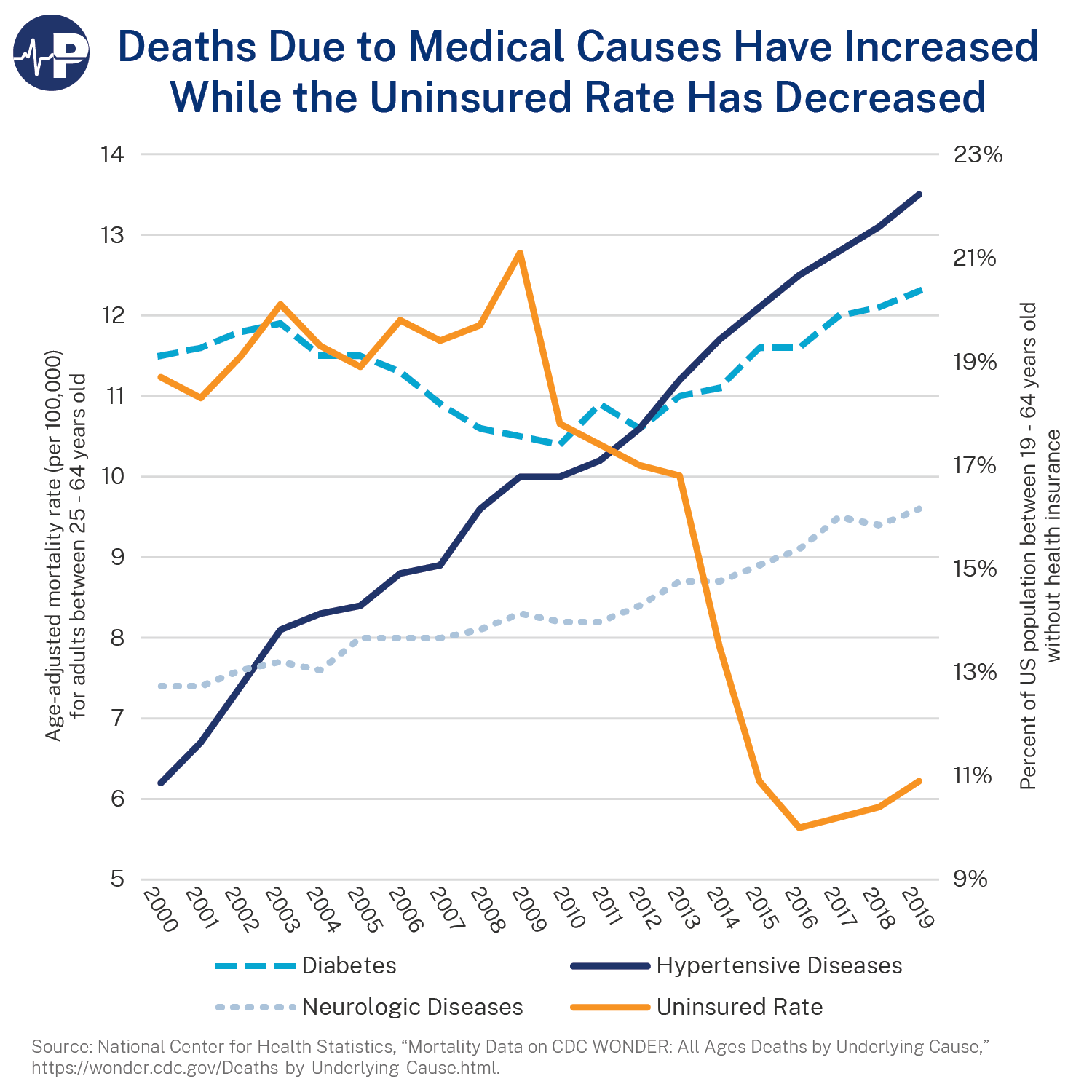
Paragon’s extensive review of the literature by Dr. Joel Zinberg and Liam Sigaud finds overwhelming evidence that health insurance does not produce better health outcomes. This research is crucial to keep in mind as insurers pressure Congress to extend Affordable Care Act (ACA) subsidies that go directly to them and that have been associated with substantial wasteful spending and fraud. This research makes it clear that policymakers should not expect health improvements from extending those expiring subsidies. As the figure below shows, mortality rates from major medical causes have risen despite unprecedented federal spending that expanded insurance coverage.

From 2014, the year the ACA’s coverage provisions were implemented, through 2019, the final year before the Covid-19 pandemic, the uninsured rate among adults ages 25-64 declined from 17 percent to 11 percent. The expanded coverage primarily through Medicaid and, to a much lesser extent, through exchange plan subsidies. Yet mortality rates from major medical causes such as diabetes, hypertensive diseases, and neurologic diseases—as opposed to deaths from intentional or unintentional injuries such as drug overdoses, alcohol-related deaths, suicides, accidents, and homicides—increased.

As Paragon’s new paper makes clear, health insurance delivers few – if any – health benefits for most people. The most persuasive evidence from randomized controlled trials indicates that expanding government-financed health coverage has little effect on measurable health outcomes such as high blood pressure, cholesterol levels, diabetes control, or mortality. Estimates suggest that medical care is responsible for only about 10 to 20 percent of the variation in health. Health behaviors such as smoking, drug and alcohol use, diet, and physical activity—areas that are part of the Make America Healthy Again movement—play a much larger role in determining health outcomes. Moreover, the uninsured receive about 80 percent as much health care as similar people with insurance.

Related Research

2MS Pic Death Due To Medicals Causes

Paragon’s extensive review of the literature by Dr. Joel Zinberg and Liam Sigaud finds overwhelming evidence that health insurance does not produce better health outcomes. This research is crucial to keep in mind as insurers pressure Congress to extend Affordable Care Act (ACA) subsidies that go directly to them and that have been associated with substantial wasteful spending and fraud. This research makes it clear that policymakers should not expect health improvements from extending those expiring subsidies. As the figure below shows, mortality rates from major medical causes have risen despite unprecedented federal spending that expanded insurance coverage.

From 2014, the year the ACA’s coverage provisions were implemented, through 2019, the final year before the Covid-19 pandemic, the uninsured rate among adults ages 25-64 declined from 17 percent to 11 percent. The expanded coverage primarily through Medicaid and, to a much lesser extent, through exchange plan subsidies. Yet mortality rates from major medical causes such as diabetes, hypertensive diseases, and neurologic diseases—as opposed to deaths from intentional or unintentional injuries such as drug overdoses, alcohol-related deaths, suicides, accidents, and homicides—increased.

As Paragon’s new paper makes clear, health insurance delivers few – if any – health benefits for most people. The most persuasive evidence from randomized controlled trials indicates that expanding government-financed health coverage has little effect on measurable health outcomes such as high blood pressure, cholesterol levels, diabetes control, or mortality. Estimates suggest that medical care is responsible for only about 10 to 20 percent of the variation in health. Health behaviors such as smoking, drug and alcohol use, diet, and physical activity—areas that are part of the Make America Healthy Again movement—play a much larger role in determining health outcomes. Moreover, the uninsured receive about 80 percent as much health care as similar people with insurance.

Related Research

Joel Zinberg
Former Director at Public Health and American Well-Being Initiative

Joel M. Zinberg, M.D., J.D. formerly served as the Director of the Public Health and American Well-Being Initiative at Paragon Health Institute, and a senior fellow with the Competitive Enterprise Institute. A native New Yorker, he recently completed two years as General Counsel and Senior Economist at the Council of Economic Advisers in the Executive Office of the President.

Liam Sigaud Headshot
Adjunct Scholar at Paragon Health Institute

Liam Sigaud is an Adjunct Scholar at the Paragon Health Institute and a Research Analyst at the Knee Regulatory Research Center at West Virginia University.