


Brian Blase, Ph.D., is the President of Paragon Health Institute. Brian was Special Assistant to the President for Economic Policy at the White House’s National Economic Council (NEC) from 2017-2019, where he coordinated the development and execution of numerous health policies and advised the President, NEC director, and senior officials. After leaving the White House, Brian founded Blase Policy Strategies and served as its CEO.
Paragon Turns Five + New Research and Policy Developments

In this week’s newsletter, I reflect on Paragon’s five-year anniversary and the principles that have guided our work. I also provide an update on the Trump administration’s removal of 760,000 phantom Obamacare enrollees, with editorials from both The Wall Street Journal and The Washington Post referencing Paragon’s research; highlight important new research from Paragon public advisor Steve Parente and visiting fellow Boris Vabson; and discuss Energy and Commerce legislation to address fraud and abuse in Medicaid.
Paragon at Five
A fifth anniversary provides an opportunity to take stock. Since Paragon launched in 2021, we have produced hundreds of newsletters, research papers, policy briefs, Prognoses, PICs, and congressional testimonies. Most importantly, our work has helped produce meaningful policy change. Our newly released 2025 annual report tells much of this story and highlights the tremendous work of the Paragon team.
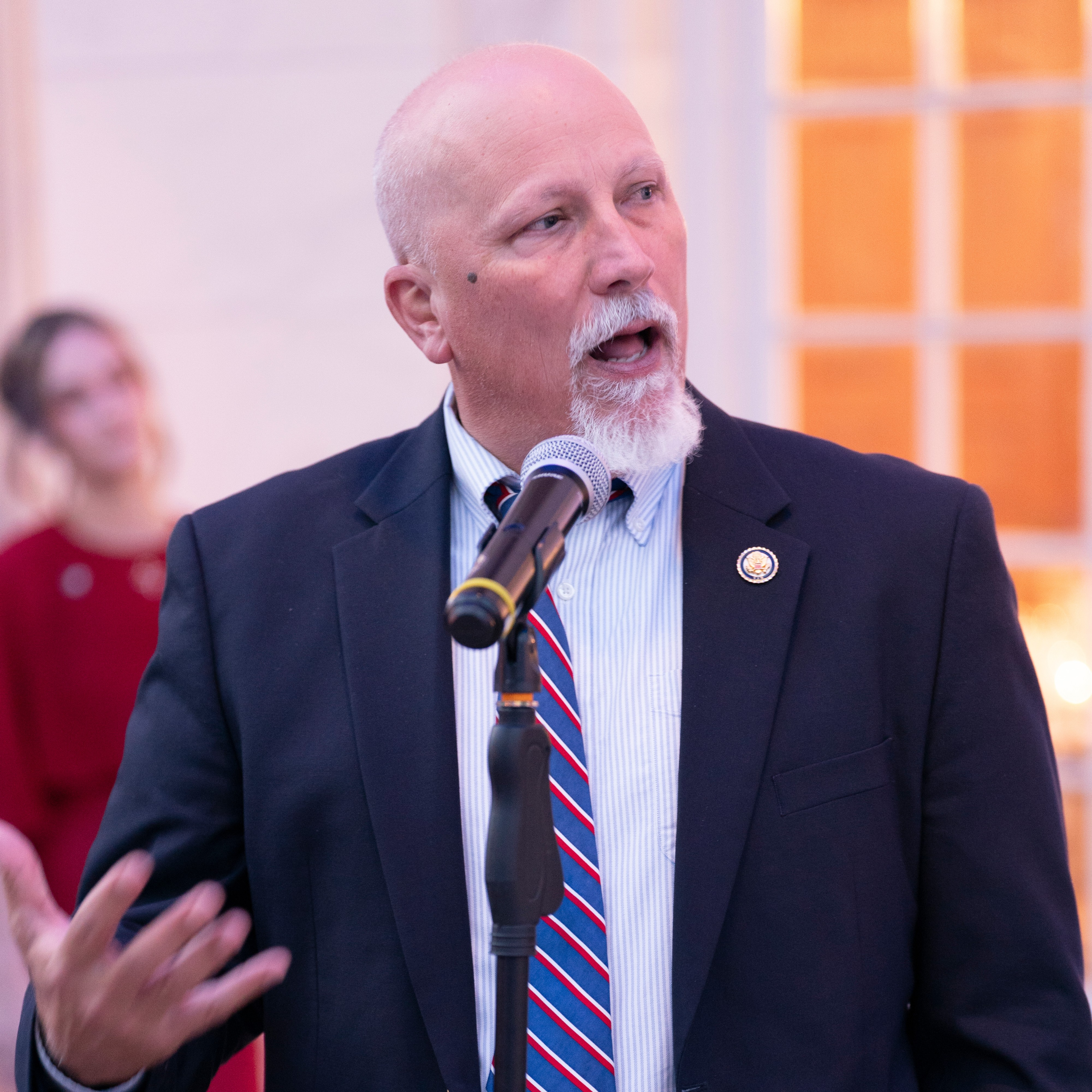
At our anniversary dinner, we were honored to welcome CMS Administrator Dr. Mehmet Oz and Texas Congressman Chip Roy, both of whom delivered remarks. We presented Dave Steffy with the Paragon Vision Award, and we remembered Grace-Marie Turner’s life and impact and unveiled a new fellowship in her name with Gabrielle Minarik as the inaugural fellow.
In preparing my own remarks for the evening, I thought about the principles that make Paragon tick. Here are the five principles I identified:
First, it starts with top-notch research and analysis. Free-market health reforms face intense scrutiny, and powerful special interests often benefit from the status quo. That means our work must be rigorous. We try to anticipate which issues will matter, do the research before the policy window opens, and subject our work to a demanding review process.
Second, results matter more than intentions. Health policy is filled with well-intentioned programs that do not work as their designers expected. Good policy requires looking at what programs actually produce—not simply what policymakers hoped they would produce.
Third, incentives matter. The first sentence of the first economics book I read in graduate school said, “Economics can be summed up in two words: Incentives matter.” That lesson has stuck with me. Government programs generate incentives for states, insurers, providers, brokers, patients, and other participants. Understanding those incentives is essential to understanding why programs produce the results they do. Our focus is on how reforms can better align incentives, so Americans, especially the most vulnerable, can receive more value from the enormous resources we devote to health care.
Fourth, good ideas must be effectively communicated. Even the best policy research accomplishes little if policymakers and the public cannot understand it. Two phrases—“Medicaid money laundering” and “phantom Obamacare enrollees”—helped make extraordinarily complicated policy problems understandable.
Fifth, and most important, people are policy. Ideas and research matter, but ultimately people develop, communicate, refine, and implement policy. We have been fortunate to work with talented people who bring different skills and perspectives to this effort. I am deeply grateful to everyone who has been part of Paragon’s first five years, and that extends far beyond Paragon’s staff. Good policy ultimately depends on principled, talented people willing to do the hard work of turning ideas into action.




Removing 760,000 Phantoms from the Affordable Care Act Exchanges
Last week, I wrote about CMS’s decision to cancel approximately 315,000 unauthorized Obamacare policies covering 760,000 phantoms. Since then, two of the country’s most prominent editorial pages—The Wall Street Journal and The Washington Post—have weighed in. Both referenced Paragon’s research documenting the extraordinary growth in improper Obamacare enrollment.
The Washington Post editorial responded directly to claims that the administration was simply taking legitimate health coverage away from people: “Except that’s not what’s happening.”
As the Post emphasized, every one of the 760,000 canceled enrollments had to meet five separate criteria:
- The enrollment was submitted by an agent or broker rather than by the consumer.
- The application lacked a Social Security number or immigration identification number.
- Taxpayers covered 100 percent of the plan premium.
- The enrollee had filed no medical claims.
- The insurer had never had contact with the supposed enrollee.
Even after an enrollment met all five criteria, the insurer had to make two attempts to contact the enrollee and wait 30 days before coverage was terminated. Crucially, anyone improperly removed can be reinstated by providing identity documentation.
The Post also cited Paragon’s estimate that 6.2 million people were improperly enrolled in exchange plans this year and concluded that the 760,000 removals may have “only scratched the surface.”
The Wall Street Journal editorial, “Cleaning Up ObamaCare Fraud,” also referenced Paragon’s work and lauded the administration as “doing good work” by removing the 760,000 enrollments.
The underlying policy failure was the proliferation of fully subsidized Obamacare plans. The COVID-era subsidy expansion dramatically increased the number of people eligible for plans requiring no premium payment from the enrollee. When the consumer pays nothing, an unscrupulous broker can enroll someone without that person ever seeing a charge leave a bank account. Meanwhile, the insurer receives the full premium from taxpayers, and brokers receive commissions each month the individual is enrolled.
Steve Parente Updates the Cost of Medicare for All
University of Minnesota economist and Paragon public advisor Steve Parente has published an important new Medicare for All analysis for the American Action Forum. Parente updated previous modeling of a Medicare for All proposal using a 2027–2036 budget window. Medicare for All would replace private employer-sponsored insurance, individual-market coverage, and Medicaid with a massive new federal program.
The fiscal implications are enormous. Parente estimates a $47.4 trillion net federal cost from 2027 through 2036 before new taxes or other financing mechanisms. To put that in perspective, the Congressional Budget Office projects total federal spending of roughly $95 trillion over the same decade.
The paper also draws an important distinction between having coverage and actually getting care. Parente finds that Medicare for All could make access worse. Making care free at the point of service means more people would seek more of it. At the same time, significantly lower payments to doctors and hospitals would mean fewer providers willing and able to deliver care. More demand and less supply add up to longer waits and harder-to-find appointments. Parente estimates that access to providers would fall 29 percent overall and 44 percent for people who have employer coverage today. Under Medicare for All, more Medicare cards could well mean fewer doctor appointments—a reality that cannot simply be assumed away, as many of the plan’s advocates do.
New Research from Paragon’s Boris Vabson
Paragon visiting fellow Boris Vabson has two new pieces of research. Boris joined Paragon earlier this year after serving as a senior advisor at the Centers for Medicare and Medicaid Services (CMS), where he led Medicare Advantage (MA) policy work.
In A Vision for Modernizing Medicare Risk Adjustment, Boris and researchers from Duke-Margolis examine how Medicare risk adjustment can be brought into the modern era. Risk adjustment is one of CMS’s most powerful policy levers, governing how hundreds of billions of dollars flow to MA plans each year. Yet the current model rests on methodology and data largely developed two decades ago, leaving it vulnerable to gaming and unable to take advantage of modern data and technology. The authors recommend that CMS test more advanced statistical methods, make better use of existing data, and incorporate new clinical data sources that could improve risk measurement while reducing opportunities for gaming.
Boris also joined AEI economists Benedic N. Ippolito and Ali Melad for a new study, The Timing of Billing and Payments Across Insurers: Evidence from Revenue-Cycle Data. Using novel data from FinThrive, a major revenue-cycle management firm, they examine several basic but poorly understood features of how billing and payment actually work:
- insurers generally complete initial adjudication about one month after a patient visit, with most of that time reflecting delays in providers submitting bills rather than insurers processing them;
- how much of what providers ultimately collect comes from the initial claim versus resubmissions and appeals; and
- how much providers lose not just to outright denials but to partial denials and downcoding.
These patterns vary sharply by payer. Fee-for-service Medicare stands out for extremely low denial rates and near-full payment of provider bills, raising important questions about whether Medicare’s coverage and payment policies provide sufficient safeguards against low-value care, waste, and fraud.
House Energy and Commerce Legislation to Tackle Health Care Fraud
In February, CMS released the most detailed public look at Medicaid spending in the program’s 60-year history. The data include 275 million records of provider-level payments from 2018 through 2024 and, for the first time, show what Medicaid managed care plans actually pay providers. For decades, taxpayers financed trillions of dollars in Medicaid spending without being able to see where much of the money went.
Using these data, Paragon and others identified striking signs of potential abuse. In California, for example, Medicaid paid more than 30 times the national median per patient per month for hospice services in assisted living facilities in 2024, corroborating concerns about hospice fraud. Our ongoing analysis has also identified providers with patterns consistent with overbilling and “claims stuffing”—billing an extraordinary number of claims per enrollee.
Sunlight is the best disinfectant, and releases like this should become routine. This week, Congressman Cliff Bentz introduced legislation requiring CMS to continue publishing these data.
Members of the Energy and Commerce Committee also introduced bills to create a shared federal analytics platform to detect schemes across state lines, require states to conduct annual fraud-risk assessments, strengthen audits of high-risk providers, establish clearer accountability for state Medicaid finances, and expand electronic visit verification to non-emergency medical transportation and autism therapy.
These are commonsense reforms. Medicaid is one of the largest programs in the federal budget, yet states and the federal government have too often lacked the data, tools, and accountability needed to identify abuse before taxpayer dollars are lost. Better transparency and better use of data can help change that.
Recent Newsletters


Subscribe
Sign up now for your health policy updates.