


Brian Blase, Ph.D., is the President of Paragon Health Institute. Brian was Special Assistant to the President for Economic Policy at the White House’s National Economic Council (NEC) from 2017-2019, where he coordinated the development and execution of numerous health policies and advised the President, NEC director, and senior officials. After leaving the White House, Brian founded Blase Policy Strategies and served as its CEO.
Health Care Price Transparency, Part D Premiums, Tracking Medicaid Hospital SDPs, and Upcoming Events

Today’s newsletter highlights another step by the Trump administration toward making health care prices easier to find and use, a new Prognosis discussing next year’s premium increases for Medicare Part D, and a Paragon PIC showing that rural hospitals account for only a small fraction of scheduled state-directed payments in two major Medicaid hospital programs in Texas and Arizona. First, I announce the return of a valued Paragon scholar and then highlight two October 14 events: a Paragon discussion of Medicare Advantage and Medicaid managed care, and a Bipartisan Policy Center discussion of FDA reform featuring Paragon Senior Research Fellow Ryan Long.
Welcome Back, Dr. Joel Zinberg
Paragon is honored to welcome back Dr. Joel Zinberg. Joel just finished a 19-month stint at the White House, serving as special assistant to the president for economic policy at the National Economic Council. Joel will resume his position as a senior research fellow and as the director of our Public Health and American Well-Being Initiative.
Medicaid’s Disadvantage: Why Private Plans Work Better in Medicare Than in Medicaid
Why do private plans have stronger incentives to serve beneficiaries in Medicare than in Medicaid? Paragon’s Demetrios Kouzoukas and Boris Vabson will explore this question with the Manhattan Institute’s Chris Pope and the Hilltop Institute’s John Kaelin, who was previously an executive at Centene. This discussion will also draw on Chris Pope’s Paragon policy brief and will examine how financing, regulation, and consumer choice shape Medicare Advantage and Medicaid managed care and ways that Medicare Advantage may offer a roadmap for how to improve efficiency, accountability, and beneficiary choice in Medicaid managed care.
This virtual event will take place on October 14 at 2 p.m. EDT, and you can register for this event here.
Bipartisan Reforms to the FDA Drug Review Process to Spur Innovation
On October 14 at 1 p.m. EDT, Ryan Long will join former acting FDA commissioner Janet Woodcock; Rohini Kosoglu, senior advisor at Stanford’s Mussallem Center for Biodesign and co-founder and board chair of The DAND Alliance; and Andi Lipstein Fristedt, executive vice president and chief strategy and policy officer at the Parkinson’s Foundation, to discuss reforms to help effective treatments reach patients faster. The Bipartisan Policy Center virtual event will examine trial initiation, evidentiary standards, individualized therapies, and incentive programs, with the upcoming prescription drug user-fee reauthorization providing an opportunity for bipartisan action. This event corresponds to the release of a forthcoming paper from Ryan and Rohini on a set of bipartisan recommendations to modernize the FDA.
You can register for this event here.
Requiring Health Care Price Information
On Monday, the Trump administration finalized important improvements to the Transparency in Coverage rules, making health care price data more useful while reducing unnecessary reporting burdens. The changes build on the price transparency requirements established during President Trump’s first term.
In September 2019, a few months after leaving the National Economic Council, I authored a Galen Institute report explaining four ways upfront health care prices could help Americans:
- Helping consumers shop for better value;
- Enabling employers to adopt benefit designs, such as reference pricing, that can reduce spending without compromising outcomes;
- Helping employers assess whether the insurers administering their plans are negotiating competitive rates; and
- Exposing outrageously high hospital and insurer prices to public scrutiny.
Government-led price transparency efforts are an important first step. The original rules required insurers and health plans to disclose negotiated provider rates. But the resulting machine-readable files became enormous and difficult to use, often filled with duplicate data and “ghost rates” for services providers do not furnish. Publishing mountains of unusable data does little to help patients or employers find better value.
Monday’s rule from the Departments of Health and Human Services, Labor, and the Treasury includes key changes that should yield more useful information.
- The rule generally requires plans to report in-network rates by provider network, rather than duplicating the same information for each individual plan, and to exclude rates for services inconsistent with a provider’s specialty.
- The rule requires plans to provide more contextual information and use more standardized reporting.
- The rule provides relief to plans by requiring updates to in-network and out-of-network pricing files quarterly, rather than monthly. The federal departments estimate the changes will save plans and insurers about $175 million annually beginning in the second year.
- The rule requires plans to make pricing files easier to locate online.
- The rule requires plans to provide personalized cost-sharing information over the phone upon request.
- The rule requires plans to attest that their pricing data are true, accurate, and complete and identify a responsible senior official.
The administration is also putting hospitals on notice. The Federal Trade Commission sent warning letters to 24 of the nation’s largest health care services companies, reminding them that failing to provide timely, accurate, and complete pricing information can constitute an unfair or deceptive practice. Disclosures may mislead patients when they omit physician or facility fees or cover only part of the expected course of care.
The administration is moving ahead with the prescription drug transparency requirement included in the original 2020 rule. The government plans to begin developing the reporting format in November, finalize it around May 2027, and have plans publish files beginning in December 2027, with monthly updates thereafter. These files will disclose negotiated rates and historical net drug prices.
Patients should know what care will cost before receiving it. More usable pricing data and stronger accountability are commonsense steps toward helping patients and employers make informed decisions and encouraging competition on price and value. The ultimate goal is not just to make inflated prices more transparent, but to ensure prices are formed more often by market processes—the same processes which have led to dramatic price reductions in other markets.
Part D’s Flat Premium Headline Masks Rising Costs and Fewer Choices
CMS projects that average premiums for stand-alone Medicare Part D plans will rise by less than $1 a month in 2027, to $36. But a new Prognosis by Boris Vabson shows why that reassuring headline obscures growing costs.
The projected monthly cost of the basic Part D benefit is rising 25 percent, to $369 per enrollee. Federal costs are projected to increase even faster—28 percent—as taxpayers finance a growing share of the benefit. The Inflation Reduction Act’s cap on base premium growth shifts more of the rising costs to the federal government.
The premium headline also depends on CMS’s expectation that many enrollees will switch to cheaper plans. For enrollees who remain in their current plans, average monthly premiums rise roughly 50 percent, from $33 to $49. Switching can require accepting higher deductibles or less favorable drug coverage.
Meanwhile, moderately priced options are disappearing. The number of plans charging $50 to $100 a month fell from 95 to 29, while total offerings declined from 367 to 323. The middle ground is shrinking between inexpensive plans with more limited drug coverage and costly plans with broader coverage.
Boris explains how the IRA’s benefit redesign contributed to these problems by increasing demand and limiting plans’ flexibility. Policymakers should address those incentives and restore room for choice and competition rather than merely shifting rising costs to taxpayers.
Medicaid State-Directed Hospital Payments Overwhelmingly Subsidize Non-Rural Providers
States often combine provider taxes with state-directed payments to draw down more federal Medicaid money and raise Medicaid payments well in excess of what Medicare pays. Hospital lobbyists have argued that the One Big Beautiful Bill’s reforms to Medicaid provider taxes and state-directed payments will devastate rural hospitals. We have already disputed these claims with evidence multiple times. Our new Paragon PIC finds that rural providers accounted for a very small share of scheduled payments under two major hospital programs in Texas and Arizona in 2025.
Using a common federal definition of rural hospitals, our analysis finds that rural providers accounted for just 3.2 percent of the $6.05 billion in scheduled payments under Texas’s statewide hospital payment program and 8.3 percent of the $3.03 billion under Arizona’s major hospital payment initiative. In both programs, more than 90 percent of the scheduled dollars went to non-rural hospitals.
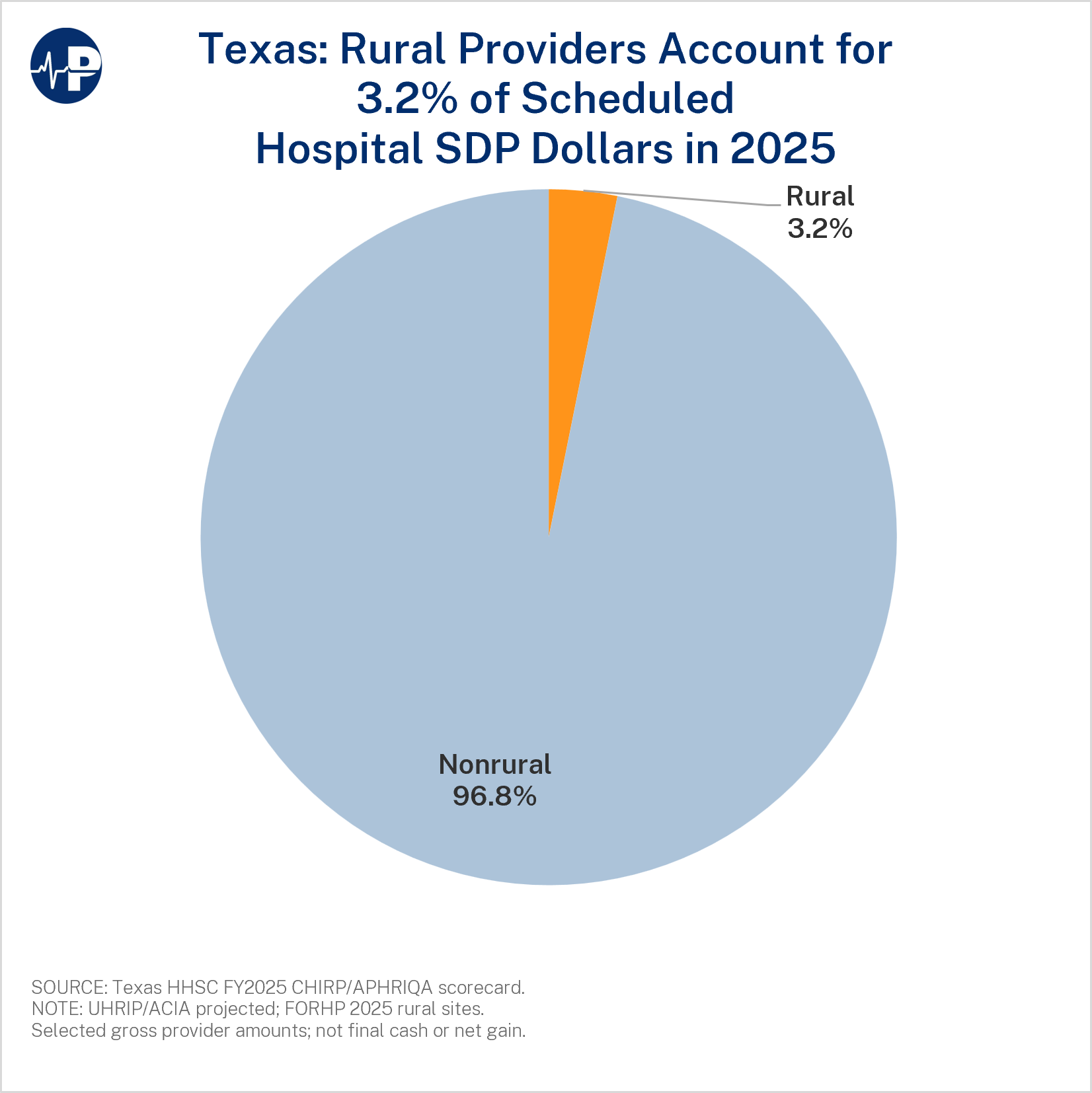
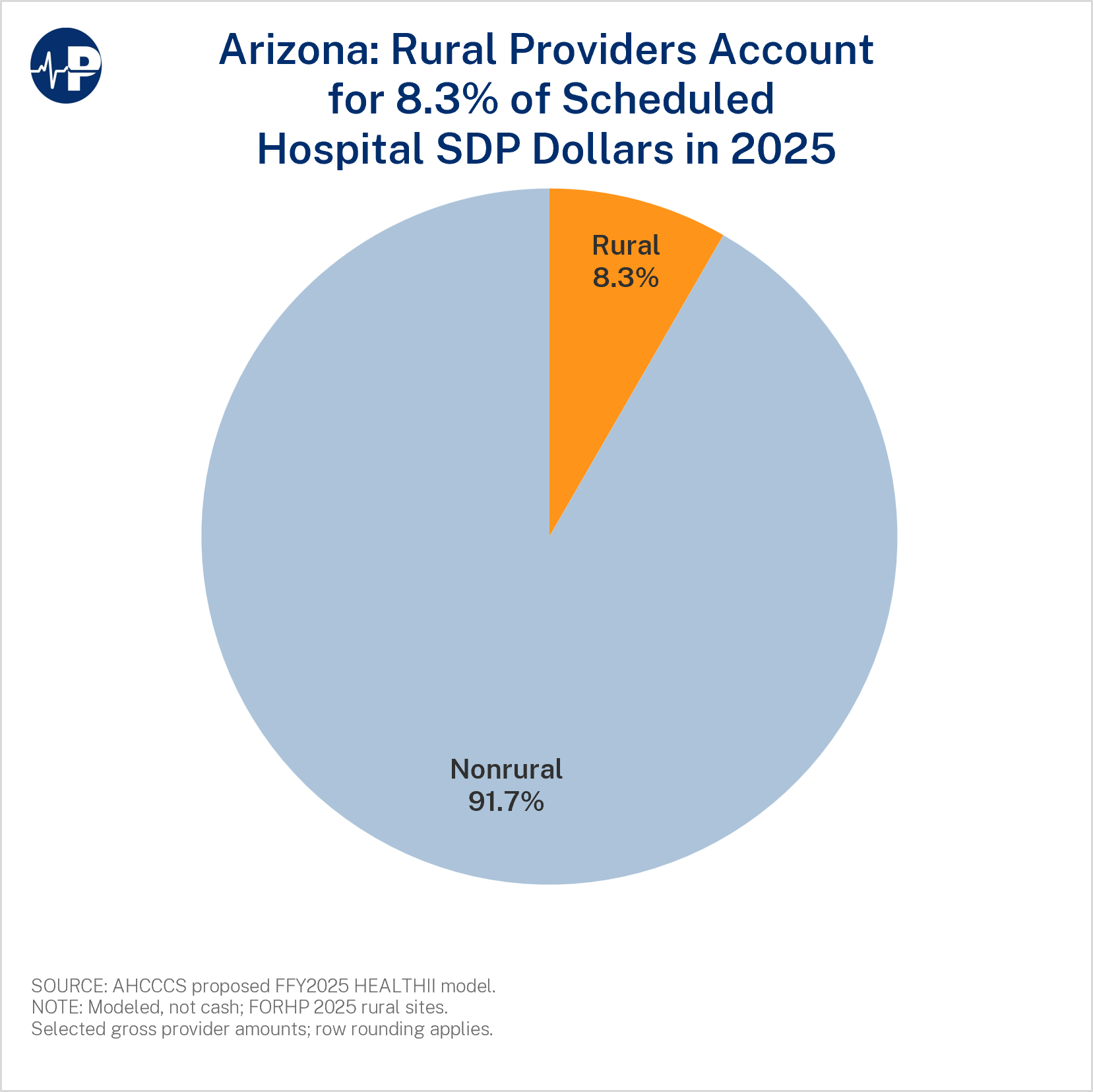
The findings challenge the portrayal of these programs as providing large-scale support to rural hospitals. Policymakers should scrutinize who benefits from those arrangements and keep Medicaid focused on the vulnerable people it is intended to serve.
Recent Newsletters


Subscribe
Sign up now for your health policy updates.