

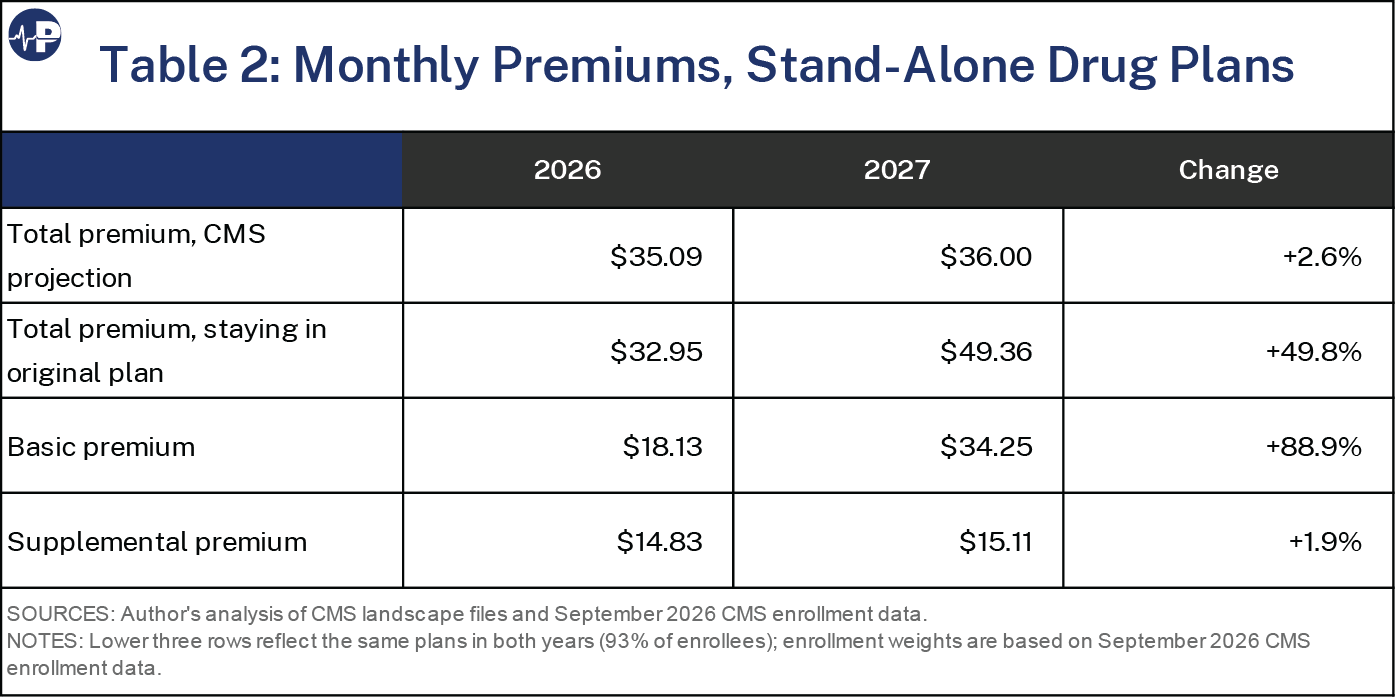
CMS recently released 2027 Medicare Part D beneficiary premiums, along with each plan’s deductible and benefit type. The headline itself appears reassuring: the average beneficiary premium for stand-alone drug plans is projected to rise by less than $1 a month, to $36.
However, beyond that headline, CMS’s data show a fundamental and ongoing deterioration of the stand-alone Part D market. Total program costs continue to explode, up 25 percent from 2026 to 2027, with the federal government picking up most of the higher tab. This is much faster than the growth in the rest of Medicare. Most enrollees who stay in their original plans face substantially higher premiums. And the market is splitting in two: the middle is disappearing, premiums across the more expensive half of plans are rising roughly 45 percent, and the total number of available plans fell from 367 to 323.
- Part D program costs are exploding
These are year-over-year increases, from 2026 to 2027, which makes them especially striking.
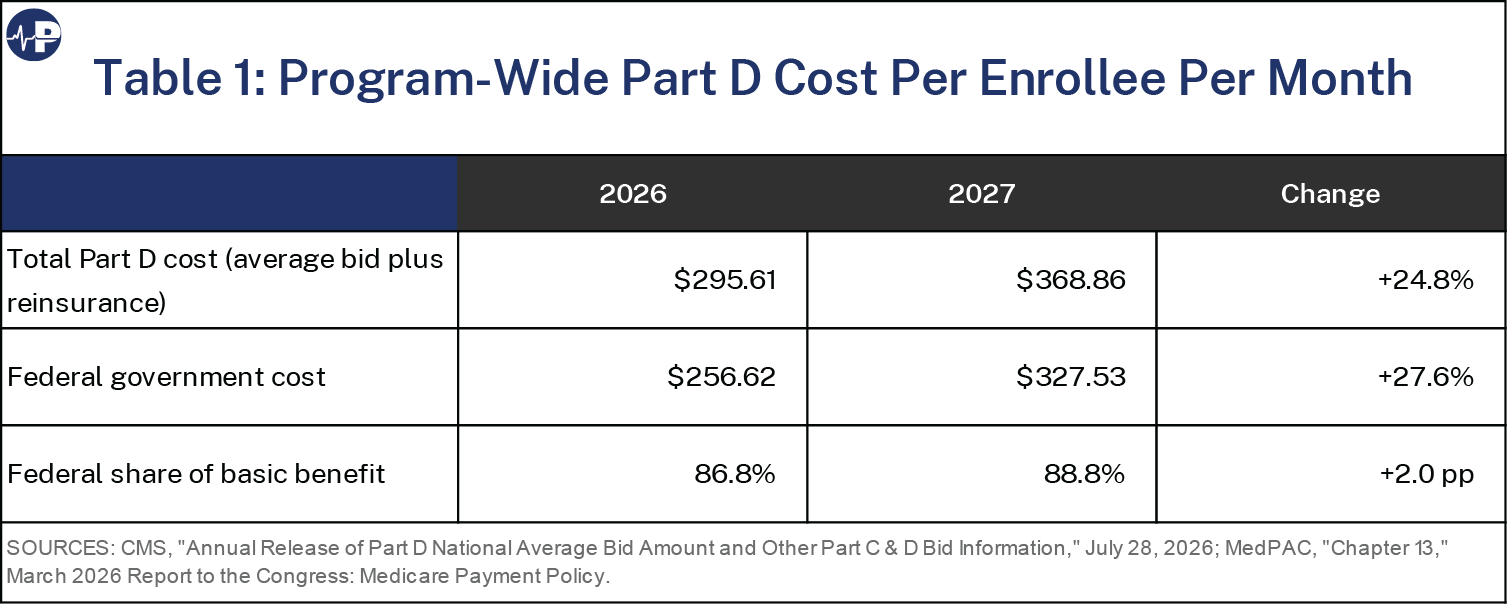
- Rising Overall Program Costs: The total cost of the basic benefit, plan bids plus federal reinsurance, is rising 25 percent, to $369 per enrollee per month (Table 1).
- Federal Costs Rising Even Faster: The federal government’s cost is projected to rise by 28 percent. Part of this is a consequence of the Inflation Reduction Act (IRA), whose 6 percent cap on base premium growth implicitly shifts most program cost growth onto the federal government.
- Rising Federal Share of Part D Spending: Taxpayers now cover 89 percent of the basic benefit for enrollees without low-income subsidies, substantially higher than the 74.5 percent in Part D’s original design.
- Far Outpacing Fee-for-Service Medicare Cost Growth: By CMS’s own projections, per capita costs in Parts A and B will grow 5.4 percent in 2027. Premiums cover about a quarter of Part B costs and 15 percent of Parts A and B combined as of 2025, against just 11 percent in Part D.
- Stand-alone plan enrollees face higher costs than the headline suggests
- CMS’s Projection of Flat Premiums is due to Expected Switching to Cheaper Plans: The $36 average reflects the agency’s projection of enrollees’ coverage next year, rather than where they are now, with many projected to switch to cheaper plans.
- Less Coverage in the Cheaper Plans: Switching to a cheaper plan typically means a higher deductible and a plan that covers fewer drugs.
- Sharply Higher Premiums for Those Who Stay in Their Original Plans: Their average total premium rises roughly 50 percent, from $33 to $49 a month (Table 2).
- The stand-alone market is splitting in two
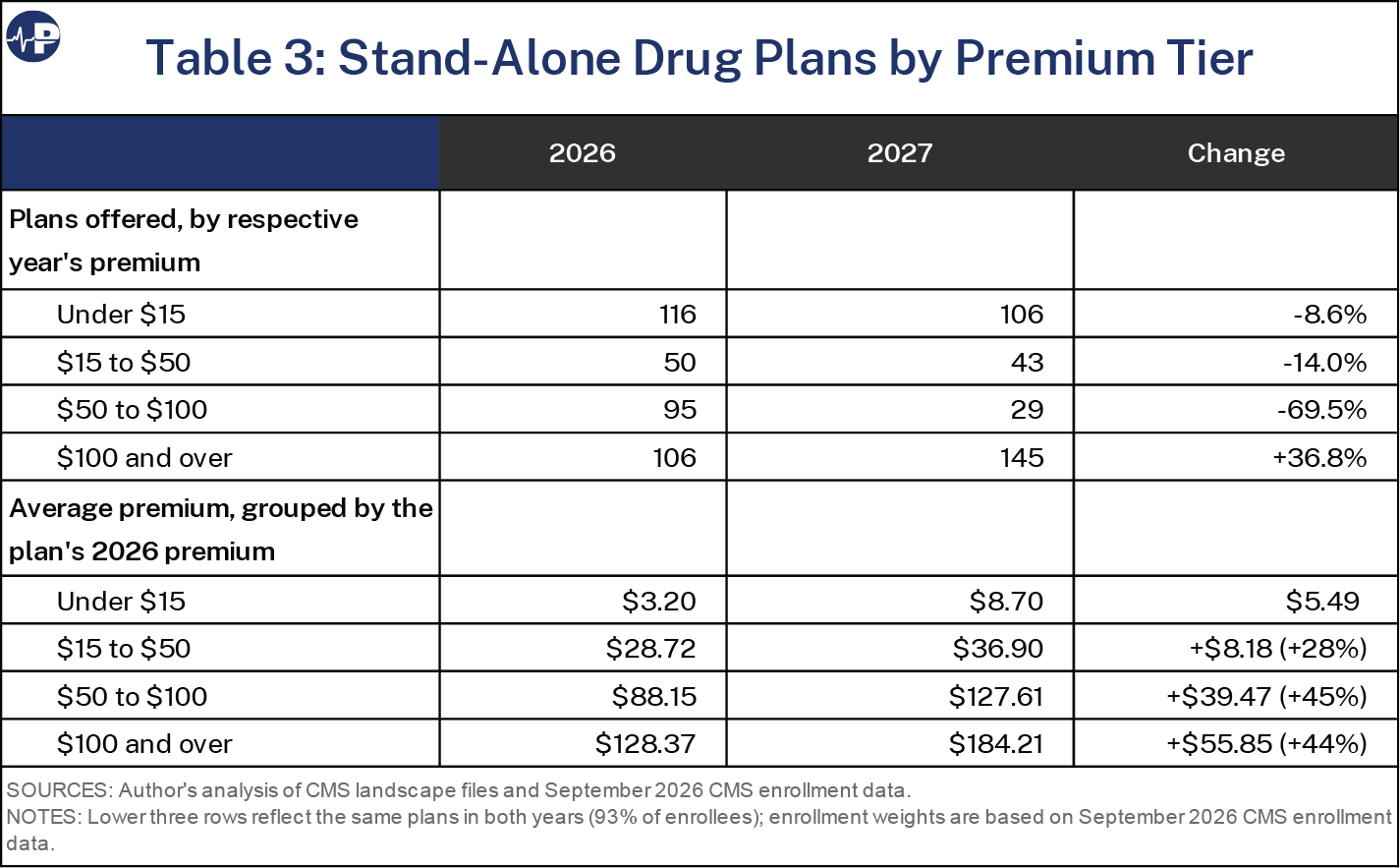
- A Disappearing Middle: The number of plans charging $50 to $100 a month in premiums fell from 95 to 29 (Table 3).
- Sharp Cost Growth at the Top: Plans that charged over $100 in 2026 had premiums rise an average of $56 a month, to $184; the 6 percent premium cap is tied to the market-wide average, so premiums for specific individual plans can rise far more.
- Fewer Options for Enrollees: The middle ground is shrinking between inexpensive plans with more limited drug coverage and costly plans with broader coverage. Plans charging under $15 or over $100 a month account for 78 percent of offerings in 2027, up from 60 percent in 2026.
The IRA is responsible for these problems
The IRA contributed to higher costs by lowering the out-of-pocket limit, which created induced demand and reduced plans’ scope for cost management. It contributed to the market bifurcation by reducing plans’ ability to customize cost sharing and benefits, while also magnifying premium differences between them. Barring IRA policy fixes or changes, these trends can be expected to continue, leading to further deterioration in the stand-alone Part D market. This experience is an expensive lesson for policymakers and enrollees that choice and competition, and not government micromanagement, are the path to sustainable options and affordability.
