As we enter 2027 open enrollment, it is important to acknowledge the widespread improper enrollment in the Affordable Care Act (ACA) exchanges. In our June 2026 report, The Persistent Obamacare Enrollment Fraud, we estimated that 6.2 million sign-ups after the 2026 open enrollment period were improper, representing approximately 27 percent of total sign-ups and potentially generating up to $25 billion in improper federal subsidy payments in 2026.
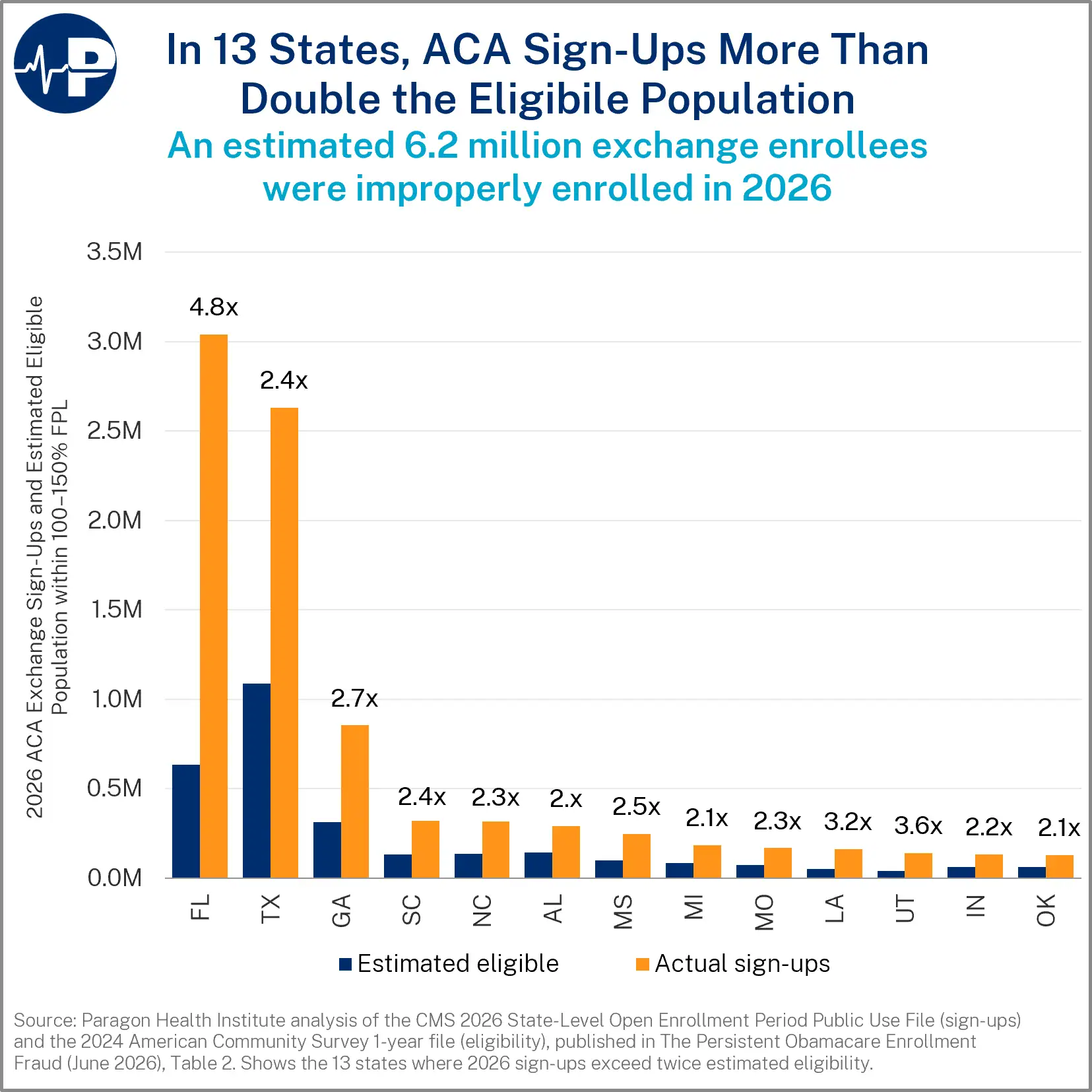
We estimate improper enrollment by comparing sign-ups among individuals reporting incomes between 100 and 150 percent of the federal poverty level (FPL) with the estimated eligible population. Using federal enrollment data and Census Bureau population estimates, our research found that 2026 sign-ups exceeded the estimated eligible population in 28 states. In 13 states, sign-ups were more than double the estimated eligible population. Importantly, our analysis used multiple conservative assumptions, such as assuming a 100% take-up rate among eligible individuals.
The disparities were particularly striking in Florida, where 2026 sign-ups were 4.8 times the estimated eligible population, followed by Utah (3.6 times), Louisiana (3.2 times), and Georgia (2.7 times). Texas recorded more than 2.6 million sign-ups in this income category in 2026—approximately 2.4 times the estimated eligible population.
These discrepancies raise serious concerns about the integrity of the exchanges and potentially large improper federal subsidy payments. Individuals reporting incomes between 100 and 150 percent FPL qualify for the most generous federal subsidies, which can cover the entire premium for bronze plans and, in many cases, gold plans. These subsidies create opportunities for improper and unauthorized enrollment.
Our research also estimates approximately 3 million phantom enrollees on an annualized basis in 2024. After accounting for legitimate enrollees who never use services, phantom enrollees include fictitious individuals and people enrolled without their knowledge or who have other coverage. These enrollments can generate federal subsidy payments for coverage that individuals did not knowingly obtain or may not need. Data for 2025 have not yet been released.
In the last year and a half, the Trump administration has sought to reduce improper enrollment through regulatory reforms, although many provisions have not yet gone into effect. These findings underscore the need for such efforts, including stronger eligibility verification and safeguards against unauthorized enrollment to protect taxpayers and ensure subsidies reach eligible individuals.