


Brian Blase, Ph.D., is the President of Paragon Health Institute. Brian was Special Assistant to the President for Economic Policy at the White House’s National Economic Council (NEC) from 2017-2019, where he coordinated the development and execution of numerous health policies and advised the President, NEC director, and senior officials. After leaving the White House, Brian founded Blase Policy Strategies and served as its CEO.
Why Biden’s COVID Credits Should Expire

Obamacare needs fundamental reform. Premiums and deductibles are too high and rising rapidly. Most plans have narrow networks that do not cover top hospitals and doctors in many areas. And the taxpayer cost to support the program is excessive.
Congress is in the midst of a debate about whether to let Biden-era Obamacare subsidy add-ons expire. These add-ons—Biden’s COVID credits—were enacted in the American Rescue Plan Act as temporary financial assistance during the pandemic, and the 2022 Inflation Reduction Act scheduled them to expire in 2025. Extending the COVID credits would cost a staggering $450 billion over the next decade—with the funds going directly to health insurers.
The COVID credits have resulted in massive fraud and improper enrollment. There are 6.4 million ineligible people on fully taxpayer-funded plans. The average Obamacare enrollee is more than twice as likely as a person in other health care markets to not use any health care services at all—no doctor visits, no prescriptions, and no lab work or tests. That pattern is highly suspicious. When these temporary credits expire, taxpayers will still cover 80 percent of premium costs for the typical enrollee—and provide even more than that for the poorest enrollees. Although a small number of people will choose to forego coverage as taxpayer support pulls back to original Obamacare levels, it will not be because the plans lack generous subsidies.
Congress should not throw good money after bad by sending more taxpayer dollars to health insurers to prop up an inefficient structure responsible for high costs and low-quality insurance. There are far better alternatives, which would include an appropriation of the cost-sharing reduction (CSR) program. Appropriating CSRs would lower premiums by up to 15 percent and reduce federal deficits by more than $30 billion over a decade. Unfortunately, Senate Democrats stripped that policy from the reconciliation bill, meaning that premiums will be higher next year.
This newsletter reviews key reasons to permit Biden COVID credits to expire, with figures Paragon has compiled in recent weeks.
Pandemic-era Obamacare Subsidy Add-ons Fueled Fraud and Much Higher Federal Costs
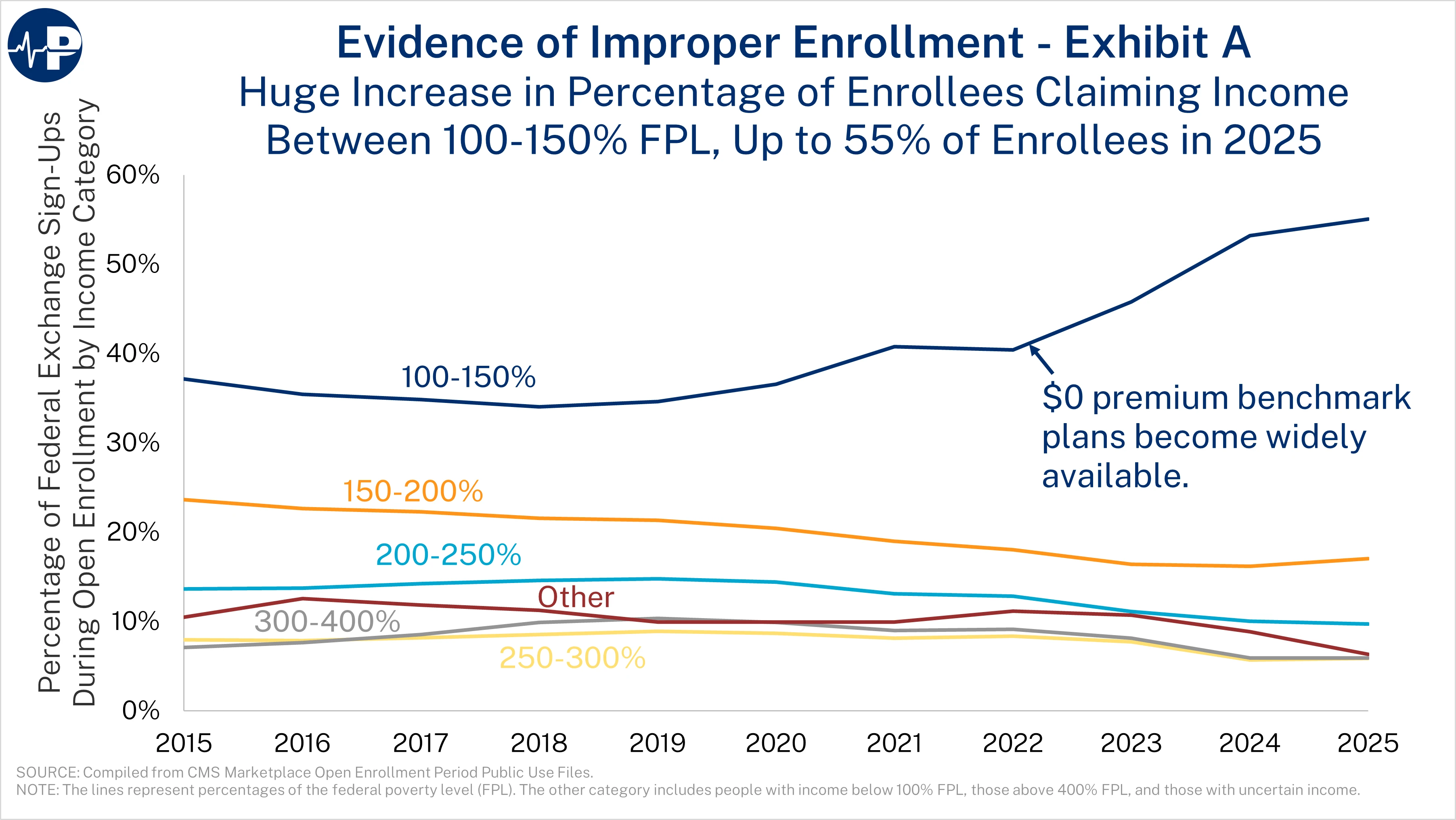
Biden’s COVID credits fueled fraud by making plans fully subsidized. More than 6 million people—more than 25 percent of all exchange enrollees—are improperly enrolled in fully taxpayer-funded plans. Improper enrollment costs taxpayers about $30 billion annually. In 15 states, there are more than twice as many enrollees claiming income between 100 and 150 percent of the federal poverty level (FPL) than are eligible. Biden COVID credits made plans fully subsidized for this income group. As the figure below shows, the Biden COVID credits caused a surge of enrollment in this category.
COVID Credits Delivered Tens of Billions to Insurers for People Who Went Without Care
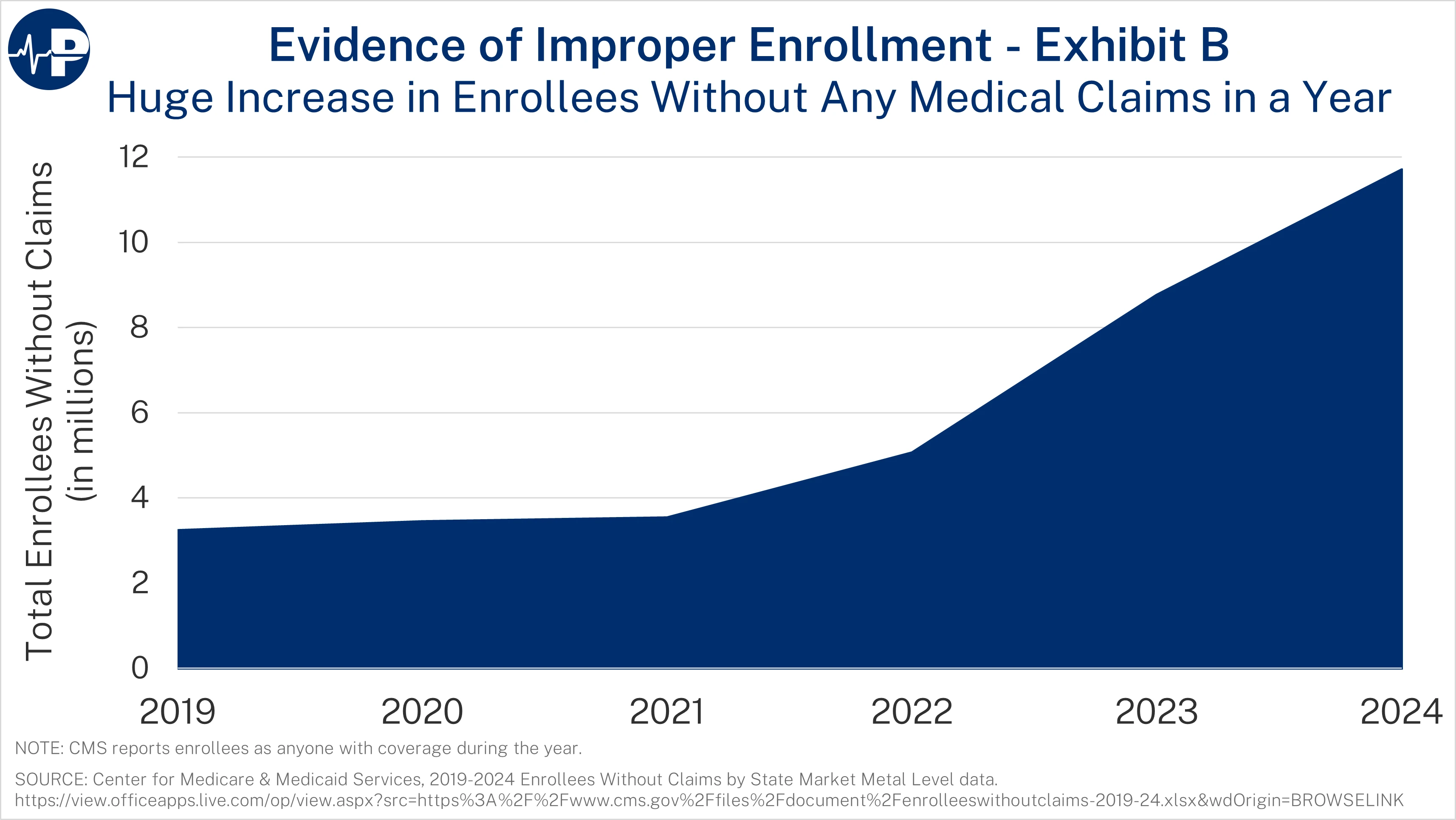
Biden’s COVID credits go directly from the U.S. Treasury to health insurers and have led to many enrollees who don’t use the plan. Nearly 12 million enrollees had no claims in 2024. (This includes everyone who enrolled at any point during the year.) As the next figure shows, the number of zero-claim enrollees more than tripled from 2021 to 2024. For these enrollees, taxpayers sent insurers tens of billions of dollars—even though they received no care. Millions of these enrollees are ‘phantoms’—individuals who either have other coverage or are unaware they are enrolled.
When the COVID Credits Expire, Most Enrollees Will Pay Low Premiums
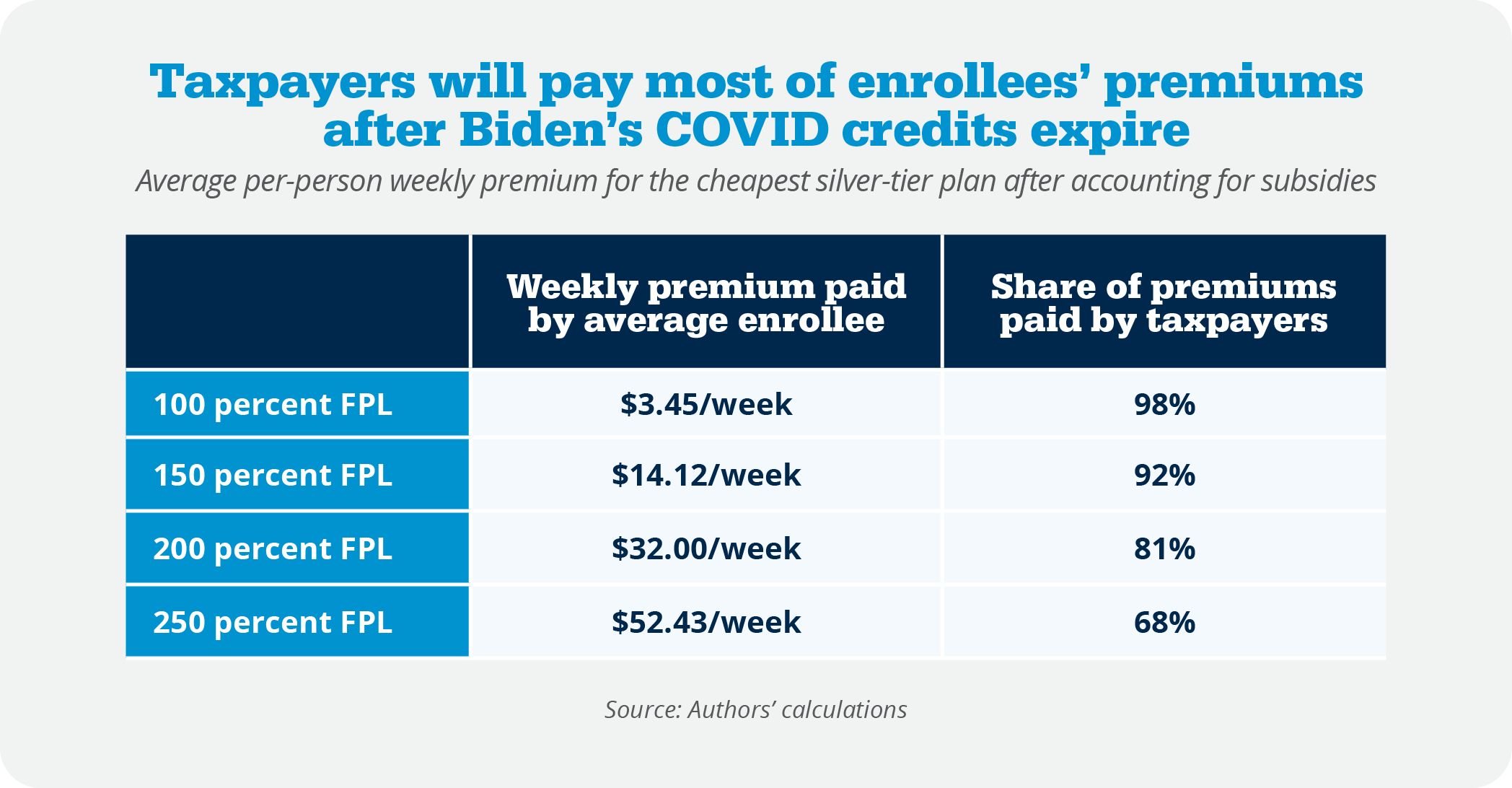
Nearly three-quarters of Obamacare enrollees earn below 250 percent of the FPL. For these households, taxpayers cover at least two-thirds of the premium for the lowest-cost silver plan—and much more for people in households with income closer to the FPL. For example, someone at 100 percent FPL would only have to pay $3.45 a week for a plan—roughly the price of a cup of coffee. Someone at 200 percent FPL would only have to pay $32 a week for a plan—roughly equal to the cost of the median DoorDash order.
When the COVID Credits Expire, Taxpayers Will Pay 80% of the Premium for the Typical Enrollee
The underlying Obamacare subsidies are inflationary—meaning that they result in higher premiums and health care costs. That’s because Obamacare subsidies cap the amount that enrollees must pay. The premium above that amount is paid by federal taxpayers regardless of the total premium cost.
The figure below is for a 50-year-old with an income equal to two times the FPL. This is about the age and income of the average enrollee. The figure shows how the taxpayer’s share of the premium has grown substantially over time while the enrollees’ share has remained flat. The orange amount is the enrollee share, and the navy amount is what the federal government covers.

From 2021 to 2025, Biden’s COVID credits (in light blue) replaced much of the enrollee share with new subsidies. That increased the government’s share of the premium to 93 percent of the cost. By comparison, KFF found that in 2024, enrollees in employer-sponsored plans paid on average 25 percent of their premium.
After this year, the COVID credits expire. But the underlying Obamacare subsidy will still cover more than 80 percent of the typical enrollee’s premium—a massive subsidy.
The Majority of Americans Want Congress to Permit COVID Credits to Expire
Special interest groups and many on the Left are purposefully distorting the fiscal realities of the Biden add-ons by portraying all Obamacare subsidies as expiring after 2025. Many opinion polls on the COVID credits are worthless because they deliberately create the impression that the debate is about whether all assistance for purchasing insurance in the Obamacare exchanges will disappear.
When the COVID credits are neutrally described (as in a poll that Paragon commissioned), a majority of voters want them to end. This background omitted the $450 billion cost of extending the COVID credits. If we had done so, support for ending the COVID credits would likely be even higher.

Recent Newsletters

Subscribe
Sign up now for your health policy updates.