Paragon Health Institute Icon White

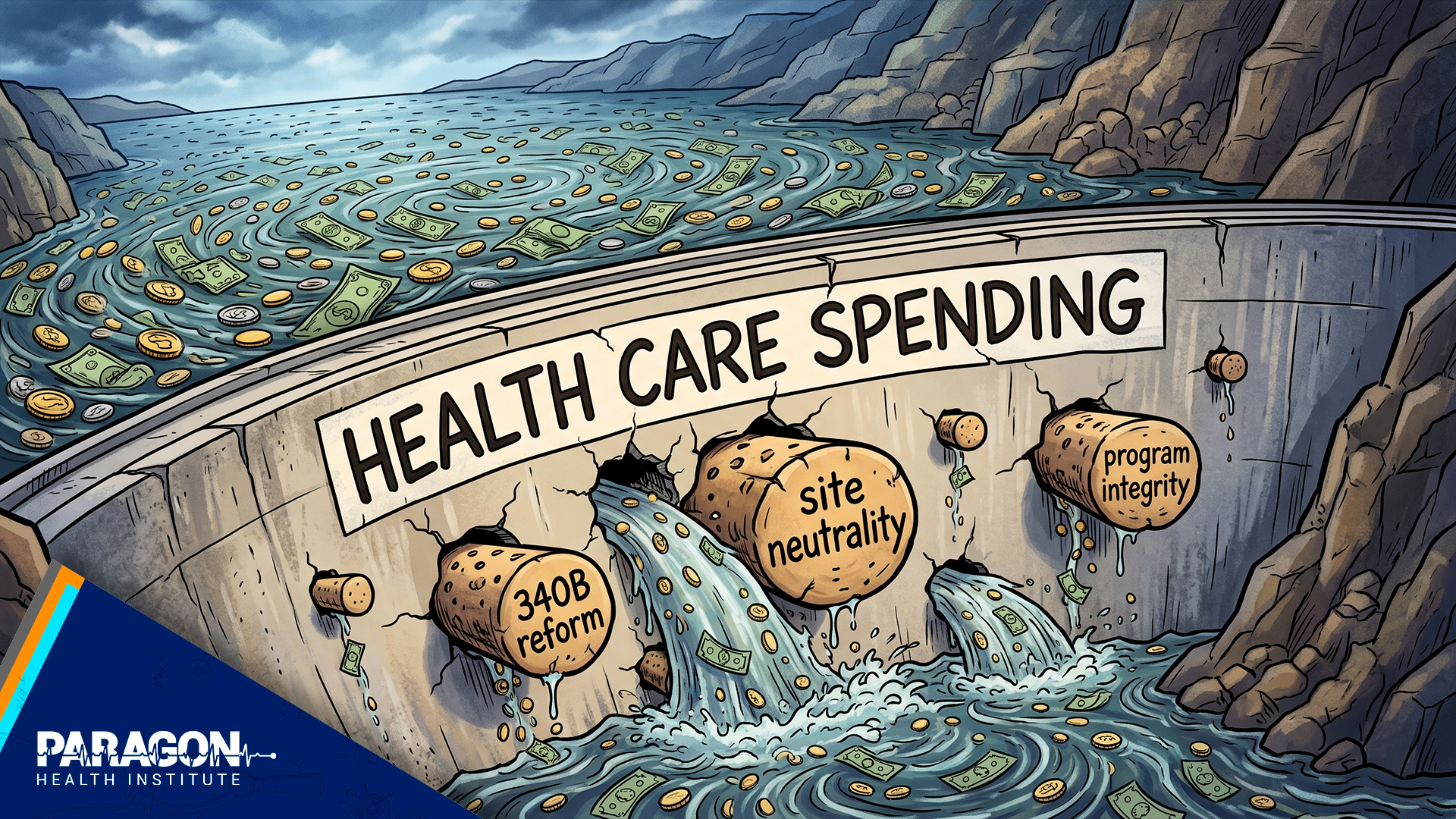
CMS’s 2027 OPPS Proposed Rule Advances 340B Payment Reform, Site Neutrality, and Program Integrity

1AW SMALLER Healthcare Spending Flood A0wUU000005gwcbYAA
3AW SMALLER 240409 STHQ DH01 0112
Senior Policy Analyst

Jackson Hammond is a Senior Policy Analyst at Paragon Health Institute. He has been active in the federal and state health policy space since 2017.

Prior to joining Paragon, Jackson was a health care policy analyst for American Action Forum (AAF). While at AAF, his work focused on payer issues including private insurance, Medicare, and Medicare Advantage. Furthermore, Jackson wrote extensively about the 340B Program and contributed to AAF’s research on a variety of drug pricing issues.

Key Takeaways

  • CMS’s proposed 2027 outpatient payment rule advances long-overdue reforms that would reduce wasteful spending, improve incentives, and strengthen Medicare program integrity.
  • Paying 340B hospitals based more closely on their actual drug acquisition costs would reduce Medicare spending, lower enrollee cost sharing, and diminish government incentives for hospital consolidation.
  • Expanding site-neutral payment policies would reduce unnecessary Medicare spending while allowing patients to receive appropriate care in lower-cost settings.
  • Requiring prior authorization for selected botulinum toxin injections demonstrates that CMS should use its existing authorities to curb waste, fraud, and abuse wherever utilization data warrant.

Introduction

On July 2, the Centers for Medicare and Medicaid Services (CMS) released its calendar year 2027 proposed rule for the hospital outpatient prospective payment system (OPPS) and ambulatory surgical center (ASC) payment system.1 The proposed rule advances important reforms: aligning Medicare  payment for 340B drugs more closely with hospitals’ acquisition costs, expanding site-neutral payment policies, and strengthening program integrity through a new prior authorization requirement for botulinum toxin injections. The proposed rule also includes a Request for Information (RFI) on ways to strengthen price transparency. Each addresses a longstanding weakness in Medicare payment policy, and together they would reduce wasteful spending, improve patient incentives, and produce meaningful savings while better serving Medicare enrollees.

Reforming Medicare Payment for 340B Drugs

The problem: Created in 1992, the 340B Drug Pricing Program functionally requires drug manufacturers to sell outpatient drugs at steep discounts to certain hospitals and clinics, with the stated purpose of allowing those entities to “stretch scarce federal resources” in serving needy patients.2 The discounts typically range from 22.5 to 50 percent off a drug’s average sales price (ASP). However, nothing in the statute requires covered entities to pass those discounts on to patients or payers. Hospitals purchase drugs at the discounted price, bill patients, government programs, and insurers at customary or higher rates, and retain the difference.

Medicare Part B illustrates this issue: Part B ordinarily reimburses providers at ASP plus 6 percent, a formula intended to approximate acquisition cost plus the overhead for administering the drug. For a 340B hospital acquiring drugs well below ASP, Medicare’s payment substantially exceeds acquisition cost. As Paragon has documented, this government-driven arbitrage opportunity has contributed to rapid program growth—from 39 participating hospitals in 1992 to nearly 3,000 today, with discounted purchases rising from $5 billion in 2010 to more than $81 billion in 2024.3 It has also encouraged hospitals to acquire physician practices and open satellite sites in higher-income communities, and it rewards the use of more expensive drugs, since the margin grows with a drug’s price.

CMS previously attempted to address this. From 2018 through 2022, the agency paid for 340B drugs at ASP minus 22.5 percent, but the Supreme Court invalidated the policy in American Hospital Association v. Becerra (2022) on the grounds that CMS had not first conducted the acquisition cost survey the statute requires before varying payment rates for 340B hospitals as compared to other hospitals. The payment change was budget neutral and increased payment for non-340B drug items and services due to statutory requirements that were not disputed as part of the lawsuit. Paragon subsequently recommended that CMS conduct the survey and reinstate an acquisition-based payment rate.4

What the rule does: CMS surveyed the drug acquisition costs of all OPPS hospitals between January and early April of 2026. The survey found substantial differences between 340B and non-340B acquisition costs; in some instances, an enrollee’s 20 percent coinsurance under current policy exceeds the hospital’s full acquisition cost for the drug. Based on the survey results, CMS proposes to pay for 340B-acquired drugs at ASP minus 33.4 percent beginning in 2027.

The rule additionally revisits the remedy CMS adopted after the Becerra decision. In 2023, CMS issued lump-sum payments to hospitals affected by the invalidated policy and planned to recoup the corresponding $7.8 billion in inflated non-drug payments through a 0.5 percent annual reduction over roughly 16 years. In a comment letter at the time, Paragon argued that a 16-year recoupment period was too long for a variety of reasons.5 The proposed rule would raise the annual offset from 0.5 percent to 3 percent beginning in 2027, completing the recoupment by 2029.

Expected effects: CMS estimates first-year savings of $4.55 billion for the Medicare program and $1.15 billion in reduced enrollee out-of-pocket costs. Because the OPPS operates under a budget neutrality requirement, these savings would again be redistributed as higher payments for non-drug services across all OPPS hospitals.

More important than the immediate fiscal savings, the proposal improves the government incentives that have fueled hospital consolidation and higher health care costs. Paying near acquisition cost removes the Medicare portion of the 340B margin through which government policy has encouraged hospitals to acquire physician practices and expand their outpatient footprint. Reduced government-driven consolidation pressure should help preserve competition and moderate some of the cost growth affecting premiums in employer-sponsored insurance and other private coverage, where 340B-related costs have been significant. The change should also weaken the distorted financial incentive to select higher-priced drugs when clinically comparable, lower-cost alternatives are available. However, the larger 340B commercial spread still exists and will continue to fuel higher costs and consolidation until the subsidy provided through the program is divorced from drug arbitrage.

With regard to the accelerated lump-sum payment recoupment, the proposal is consistent with Paragon’s recommendation and would improve both the accuracy and fiscal value of the remedy.


Expanding Site-Neutral Payment

The problem: Medicare frequently pays more for identical services furnished in a hospital outpatient department than in a physician’s office, solely because hospital settings receive an additional facility payment. As Paragon has explained, these payment differentials raise costs for the program and for enrollees without corresponding differences in quality.6 They also encourage hospitals to acquire independent physician practices and convert them to outpatient departments in order to bill at the higher rate, a dynamic that contributes to provider consolidation and places independent physicians at a financial disadvantage. Paragon estimated that comprehensive site-neutral reform in Medicare could save hundreds of billions of dollars for taxpayers and enrollees over a decade.7

What the rule does: Building on the 2019 policy that equalized payment for clinic visits at excepted off-campus provider-based departments, and on last year’s extension of that policy to drug administration services, CMS proposes to pay physician-office rates for services in the “imaging without contrast” ambulatory payment classifications furnished at those same off-campus departments. This category covers routine imaging performed without contrast dye, such as standard X-rays, ultrasounds, and many MRI and CT scans.

The rule also continues the phase-out of the inpatient only (IPO) list, which restricts Medicare payment for certain procedures to the inpatient setting, and the expansion of the covered procedure list (CPL), which allows more procedures to be done in ASCs. This is the second year of a three-year process, with 637 procedures proposed for removal from the IPO list and 618 procedures proposed for addition to the CPL. In a comment letter on last year’s rule, Paragon noted that the IPO list and CPL substitute regulatory judgment for physicians’ clinical judgment and patients’ preferences, insulate higher-cost settings from competition with alternatives, and burden rural patients who may live far from certain facilities.8 Removing the IPO list and expanding the CPL allows physicians to select the appropriate setting for each patient, reduces costs for Medicare and for enrollees, and supports the development of capacity in communities that cannot sustain a full-service hospital.

Expected effects: CMS estimates first-year savings of $190 million in Part B spending and $70 million in reduced enrollee premiums from the proposal to change payment rates for imaging services. These provisions move Medicare closer to a fully site-neutral payment structure. Beyond reducing costs for taxpayers and Medicare enrollees, progress in Medicare may encourage broader adoption of site-neutral approaches across the health sector because Medicare’s payment policies heavily influence how commercial payers structure their own. This may lead to corresponding reductions in consolidation incentives and costs for privately-insured patients.

Prior Authorization for Botulinum Toxin Injections

The problem: Medicare pays for botulinum toxin injections as treatment for a variety of medical conditions, including spastic conditions, migraines, and sweat disorders. CMS has identified a 42.8 percent increase in the volume of botulinum toxin injection procedures between 2017 and 2024 that does not appear to be explained by clinical need. The agency has existing authority to require prior authorization for outpatient services that exhibit unnecessary volume growth as a safeguard against waste, fraud, and abuse.

What the rule does: CMS proposes to add eight botulinum toxin injection codes to the list of services requiring prior authorization. These codes represent $102 million in annual spending in Medicare.

Expected effects: The requirement should reduce improper spending while preserving access to medically necessary care, and consistent use of these program integrity tools deters improper billing elsewhere in Medicare. CMS should continue expanding data-driven prior authorization requirements to other services exhibiting unusual utilization growth or evidence of improper billing.

Price Transparency RFI

CMS included a request for information (RFI) in this proposed rule on how to improve current price transparency obligations for hospitals. CMS seeks comment on ways to improve hospital price transparency data consistency, comparability, and consumer usability. Paragon has previously written on ways to improve price transparency for hospitals.9

Conclusions

The proposed rule addresses payment distortions that have contributed to unnecessary spending and provider consolidation for many years. Its major provisions rest on clear statutory authority and, in the case of the 340B policy, on newly-collected acquisition cost data. Finalizing these proposals would improve Medicare’s payment accuracy, reduce government incentives for unnecessary consolidation, strengthen program integrity, and lower costs for taxpayers and enrollees. CMS should build on these reforms by continuing to pursue the broader payment and regulatory changes outlined in Paragon’s previous recommendations.10

Footnotes

1 U.S. Department of Health and Human Services, Centers for Medicare & Medicaid Services, "Medicare Program: Hospital Outpatient Prospective Payment and Ambulatory Surgical Center Payment Systems; and Quality Reporting Programs," Federal Register 91, no. 128 (July 7, 2026): 41734?42032, https://www.federalregister.gov/documents/2026/07/07/2026-13656/medicare-program-hospital-outpatient-prospective-payment-and-ambulatory-surgical-center-payment
2 Jackson Hammond, "340B 101," Paragon Health Institute, September 11, 2024, https://paragoninstitute.org/private-health/340b-101/
3 Jackson Hammond, "340B: End the Spread," Paragon Health Institute, May 13, 2026, https://paragoninstitute.org/paragon-prognosis/340b-end-the-spread/
4 Theo Merkel and Brian Blase, "Paragon Submits Public Comment to CMS Urging Them to Reconsider Proposed Remedy to 340B Drug Payment Policy," Paragon Health Institute, September 8, 2023, https://paragoninstitute.org/medicare/340b-drug-pricing/
5 Theo Merkel and Brian Blase, "Paragon Submits Public Comment to CMS Urging Them to Reconsider Proposed Remedy to 340B Drug Payment Policy," Paragon Health Institute, September 8, 2023, https://paragoninstitute.org/medicare/340b-drug-pricing/
6 Joe Albanese, "Reducing Overpayments in Medicare through Site-Neutral Reforms," Paragon Health Institute, June 7, 2023, https://paragoninstitute.org/medicare/reducing-overpayments-in-medicare-through-site-neutral-reforms/
7 Joe Albanese, "Reducing Overpayments in Medicare through Site-Neutral Reforms," Paragon Health Institute, June 7, 2023, https://paragoninstitute.org/medicare/reducing-overpayments-in-medicare-through-site-neutral-reforms/
8 Brian Blase and Jackson Hammond, "Paragon Submits Public Comment on the 2026 Outpatient Prospective Payment System Proposed Rule," Paragon Health Institute, September 15, 2025, https://paragoninstitute.org/medicare/paragon-submits-public-comment-on-the-2026-outpatient-prospective-payment-system-proposed-rule/
9 Theo Merkel, "Health Care Price Transparency: Achievements, Challenges, and Next Steps," Paragon Health Institute, August 2, 2023, https://paragoninstitute.org/private-health/health-care-price-transparency/
10 Demetrios L. Kouzoukas and Jackson Hammond, "Advancing Choice, Competition, and Fiscal Sustainability in Medicare: A Roadmap for CMS," Paragon Health Institute, February 11, 2026, https://paragoninstitute.org/medicare/advancing-choice-competition-and-fiscal-sustainability-in-medicare-a-roadmap-for-cms/

Subscribe

Sign up now for your health policy updates.

This field is for validation purposes and should be left unchanged.
Name(Required)