



Over the years, many expert predictions about the Affordable Care Act (ACA) have proven to be significantly inaccurate. For instance, the CBO’s original estimate of 40 million Americans enrolling in the individual market by 2021 turned out to be closer to 20 million. Additionally, the alarmist forecasts in 2018 about the repercussions of ending the individual mandate tax penalty and defunding cost-sharing reduction (CSR) subsidies turned out to be exaggerated. Given this track record, policymakers have valid reason to approach new ACA predictions with skepticism. As experienced actuaries, we have lived a continuous cycle of assurance that “these catastrophic projections are overblown” as repeated dire forecasts pertaining to ACA-related policy changes have historically failed to materialize.
While various factors influence enrollment dynamics, one policy change has received outsized attention—the expiration of temporary subsidy enhancements to address the COVID-19 pandemic in the American Rescue Plan Act (ARPA) and continued through 2025 in the Inflation Reduction Act (IRA). Oliver Wyman, an actuarial consulting firm, recently projected that an alarming 1.7 million people with chronic conditions will terminate their health insurance coverage if the enhanced subsidies are permitted to expire. Naturally, this prediction of vulnerable Americans lapsing coverage received considerable attention. But given the track record of these types of predictions, stakeholders should proceed with caution and skepticism before relying on them.
In this analysis, we critically assess these claims through common-sense evaluations. Ultimately, we find that Oliver Wyman’s estimates lack the precision and validity necessary for policymaking. If the enhanced subsidies expire, it’s likely that far fewer people overall, including those with chronic conditions, will lose coverage.
Assessing Enrollment Impact Projections
Oliver Wyman estimates that 8.3 million individuals enrolled in ACA plans have at least one chronic condition, accounting for 38.8% of enrollees. In contrast, a CMS report reveals that only 21.8% of ACA enrollees had at least one Hierarchical Condition Category (HCC) condition in 2023. While Oliver Wyman uses a broader definition for “chronic condition”, CMS identifies only 21.8% of enrollees as having medical conditions that warrant recognition within the ACA framework.
With approximately 21.4 million exchange consumers in 2024, the number of individuals with medically recognized conditions under the ACA is likely closer to 4.7 million, not 8.3 million.


Oliver Wyman appears to think that 24% of these individuals would drop their coverage, but we find this assumption highly implausible. Many of these enrollees can still access free coverage through other ACA-exchange plans even without the enhanced subsidies. In short, those with high-cost conditions are the most appreciative of the value of subsidized insurance and are unlikely to lapse coverage if the enhanced subsidies expire.
Anticipating the Impact of Subsidy Expiration
Using CMS data, we estimate that approximately 3.3 million ACA individual market enrollees had an HCC condition in 2021. This number increased to 3.9 million by 2023 and is likely near 4.7 million in 2024. At most, the enhanced subsidies likely added about 1.4 million individuals with HCC conditions.
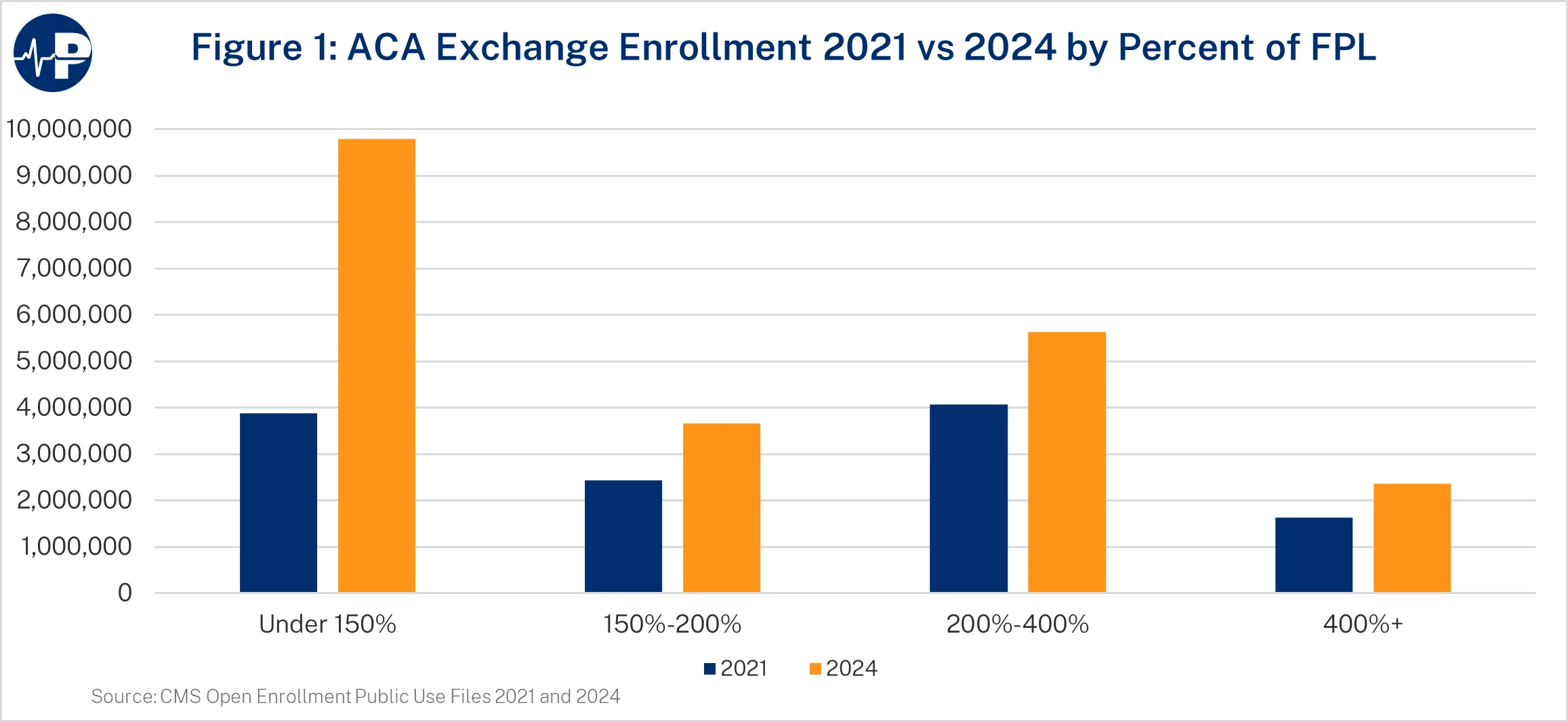
The most significant impact of the enhanced subsidies expiring will be felt by enrollees earning over 400% of the FPL, who make up only 700,000 of the over 9 million new enrollees. Among those, it’s estimated that only 100,000 to 200,000 people have an HCC condition. For the 7 million low-income Americans now enrolled in the ACA individual market, it is highly unlikely that they will go uninsured over a $30 to $45 increase in monthly premiums—especially when free ACA coverage will still be available in many areas. It’s even less probable that individuals with chronic conditions will drop their coverage for such a nominal increase.
What impact can we expect? Based on our experience as actuaries managing various rate changes and observing consumer behavior, a reasonable estimate is that a $10 increase in premiums could lead to a 1% to 3% reduction in enrollment, primarily among healthy, price-sensitive individuals. Therefore, policymakers should not be surprised if the expiration of enhanced subsidies has a minimal effect, resulting in an overall enrollment decrease of 1 to 3 million,1 with around 100,000 to 300,000 individuals with chronic conditions losing coverage.
Ignoring the Other Factors
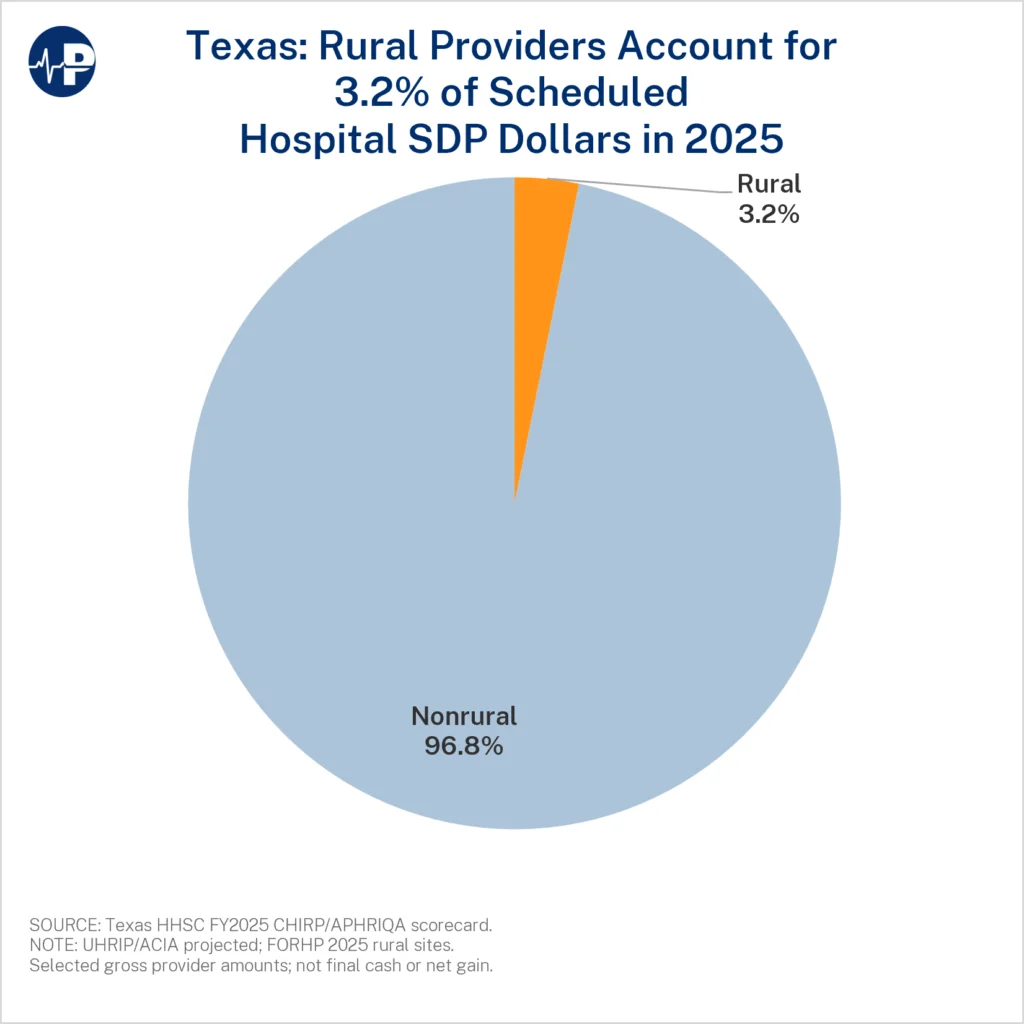
Importantly, there are factors, other than the enhanced subsidies, that have led to higher enrollment and many of these factors will persist if the enhanced subsidies expire. First, as we have written before, some states, like Texas, have enforced single risk pool requirements which have increased relative silver plan premiums and subsidies and thus enrollment. The subsidy enhancement was effectively a change in a national formula, while the enrollment growth in the ARPA-era has been far from uniform, suggesting that other factors and state-level changes are underappreciated when assessing the impact of ARPA. As a comparison, Texas enrollment increased by 170% from 2021 to 2024 while enrollment in the state most similar in market size, California, only increased by 10%, suggesting other primary drivers of recent enrollment increases than the expanded subsidies.
Second, even before the expanded subsidies, insurers had been significantly increasing broker compensation for ACA enrollments. Policymakers should not underestimate the power of distribution channels and the impact of sales agents on health insurance sales. ARPA occurred amid the ACA individual market premiums stabilizing after undergoing tremendous upheavals from 2014 to 2018. Average benchmark premiums decreased every year from 2018 to 2022, and insurer participation has increased each year since 2018. Many insurance carriers, after seeing the new stability and profitability within the ACA market, started to increase agent commissions to sell ACA products. Millions of Americans had access to $0 premium plans with generous coverage and a sales force had incentives to sign these people up. Direct enrollment has also played a large part in enrollment growth, as evidenced in 65% growth in federal-exchange states from 2022 to 2024, significantly higher than the 10% experienced in state-exchange states. There is no reason to believe the distribution channel infrastructure would revert to pre-ARPA levels as a result of modest net premium changes.
Predictions about the impact of ARPA subsidies, such as those in the Oliver Wyman paper, must acknowledge that millions of people are likely receiving excessive subsidies due to income manipulation, partly driven by lead generators, brokers, and lax CMS enforcement. While difficult to quantify, much of the enrollment increase following ARPA can be attributed to new consumers becoming aware of $0 insurance options—often with manipulated income claims during the application process—supported by a surge in agent involvement in the market. Discussions are ongoing regarding stronger income verification enforcement, which could lead to a decline in fraudulent enrollment, regardless of whether or not subsidy enhancements expire.
We don’t expect that out-of-pocket premiums going from $0 to something between $30 to $45 a month for plans costing around $600 a month on average is going to significantly change the established consumer awareness and participation in the market, although it should cut down on fraudulent enrollments. It’s also not going to change agent incentives to keep these people enrolled. More Americans now know they can get highly generous health insurance coverage for $30 to $45 (and other coverage for free) and will most likely remain insured. The bigger question that will likely drive future enrollment is whether we enforce rating compliance, better ensure eligibility rules are followed, and make it harder for agents to misstate applicant income to sign up folks for free coverage. The loss of the marginal ARPA subsidy increases will likely play a lesser role, particularly for those with chronic conditions.
Ultimately, while the expiration of enhanced subsidies may lead to a modest decline in overall enrollment—estimated between 1 to 3 million—we expect the vast majority of individuals with chronic conditions to remain covered. This reinforces the idea that we should not anticipate a return to pre-ARPA enrollment levels simply because enhanced subsidies are expiring. The enrollment dynamics reflect other policy changes at the federal and state level and enduring trends that go beyond temporary financial assistance intended to alleviate the burden of 40%+ premium changes during a pandemic, a scenario that was likewise informed by sensationalist projections.