

The FDA should prioritize streamlining the pathway to unlock these gains for millions of Americans.
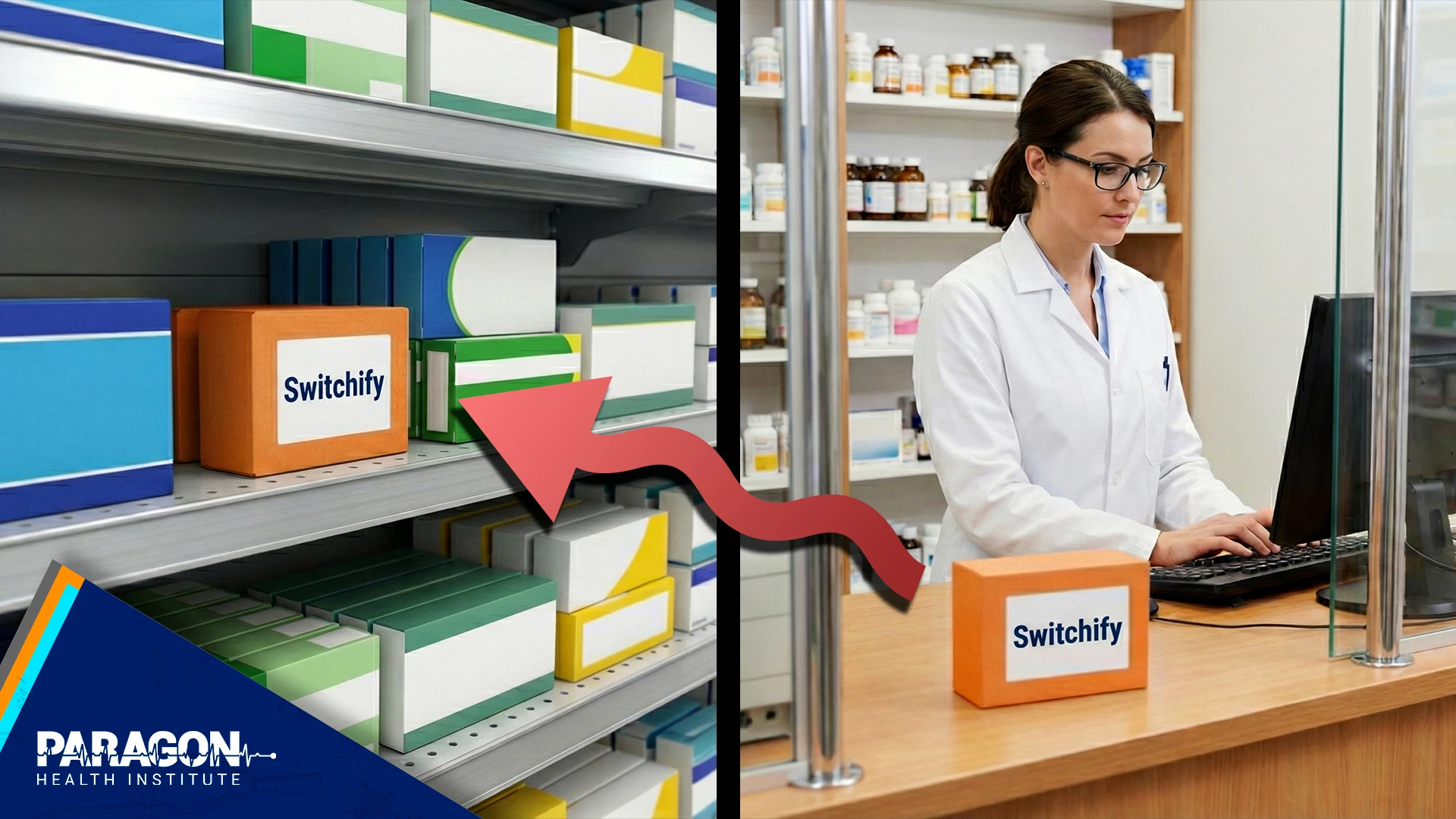
A prescription-to-over-the-counter (Rx-to-OTC) switch is the regulatory process through which a medication previously available only with a physician’s prescription is reclassified by the U.S. Food and Drug Administration (FDA) for direct sale to consumers without the need for a prescription. The FDA approves such switches when evidence demonstrates that consumers can safely and effectively use the drug based solely on the product labeling, without professional oversight.
Switching prescription drugs to over-the-counter (OTC) status offers significant benefits for consumers, health care payers, and the broader system. By allowing safe self-medication without physician oversight, these switches increase accessibility, empower patients, and reduce unnecessary health care spending. Evidence from economic analyses shows that Rx-to-OTC transitions often lower drug prices through market competition and reduce overall health care expenditures by eliminating unnecessary doctor visits.
The most obvious benefit is direct price reduction for consumers. When a drug switches to OTC, it faces more direct competition, including from generics, and eliminates middlemen that can inflate costs. Most OTC switches result in cost savings for patients and payers (such as employer plans or government programs). A 2013 study found, “the demand for OTC products is likely to be more elastic due to lack of insurance coverage for OTC products. Hence, drug makers would be inclined to charge a lower price, especially for chronic diseases.”
Beyond lowering drug prices, OTC availability yields substantial savings by avoiding physician visits. Many common conditions—such as allergies, heartburn, or minor pain—do not require professional diagnosis for safe treatment. A 2022 study by the Consumer Healthcare Products Association (CHPA) estimated that OTC medicines save the U.S. health care system $167.1 billion annually, with $110.3 billion stemming from avoided unnecessary doctor visits. These forgone visits, often costing $150–$200 each for primary care, represent a direct burden lifted from patients (time and copays) and insurers (reimbursements). As we grapple with the rising cost of health care, empowering patients through OTC switches can play a small but important part in lowering overall health care costs.
Congress recognized the benefits of OTC access by categorizing OTC drugs as eligible spending from Health Savings Accounts (HSAs) when HSAs were established in 2003. In 2010, the Affordable Care Act (ACA) inexplicably changed the rules and required a physician’s prescription to qualify a drug as eligible for payment using an HSA. This change discouraged OTC use by adding friction—patients had to visit a doctor for a prescription just to access the tax advantages of the HSA—driving more traffic to costlier prescription channels and physician offices.
Thankfully, this barrier was reversed in 2020 when President Trump signed the Coronavirus Aid, Relief, and Economic Security (CARES) Act. Restoring this pre-ACA policy directly incentivizes consumers—especially those with high-deductible health plans paired with HSAs—to opt for lower-cost OTC alternatives instead of prescription drugs and avoid often unnecessary doctor visits. By preserving tax advantages for OTC products, it lowers out-of-pocket costs for individuals, reduces insurer and employer spending on unnecessary appointments, and reinforces the economic case for broader OTC switches. This alignment of tax policy with consumer empowerment can yield billions in additional system-wide savings as more drugs become OTC-eligible.
The FDA’s process for approving Rx-to-OTC switches, while rigorous, has drawn criticism for being overly cumbersome and slow. Manufacturers must submit a supplemental New Drug Application (NDA) demonstrating that the drug is safe and effective for self-use, supported by label comprehension studies, self-selection trials, and actual-use studies simulating real-world consumer behavior. These requirements can take years and significant resources.
Recently, the FDA has taken steps to ease the path toward more OTC switches. In December 2024, the agency finalized a rule for “Additional Conditions for Nonprescription Use” (ACNU) which created a pathway for drugs requiring extra steps—such as apps, questionnaires, or pharmacist consultations—to gain OTC status without full physician supervision, overcoming traditional labeling limitations. In December 2025, the FDA issued a Request for Information (RFI) on increasing non-prescription drug access, seeking input on scientific, regulatory, and practical barriers to inform a planned public meeting in 2026. These efforts signal growing recognition of OTC potential, and the RFI and public meeting are opportunities for stakeholders to provide feedback on how best to realize that potential.
Expanding OTC switches empowers patients and reduces costs both for patients and the health system as a whole. With proven price reductions, billions in avoided visit costs, supportive tax policies like the CARES Act, and recent FDA momentum, more switches will make treatments cheaper and more accessible. Policymakers should prioritize streamlining the pathway to unlock these gains for millions of Americans.