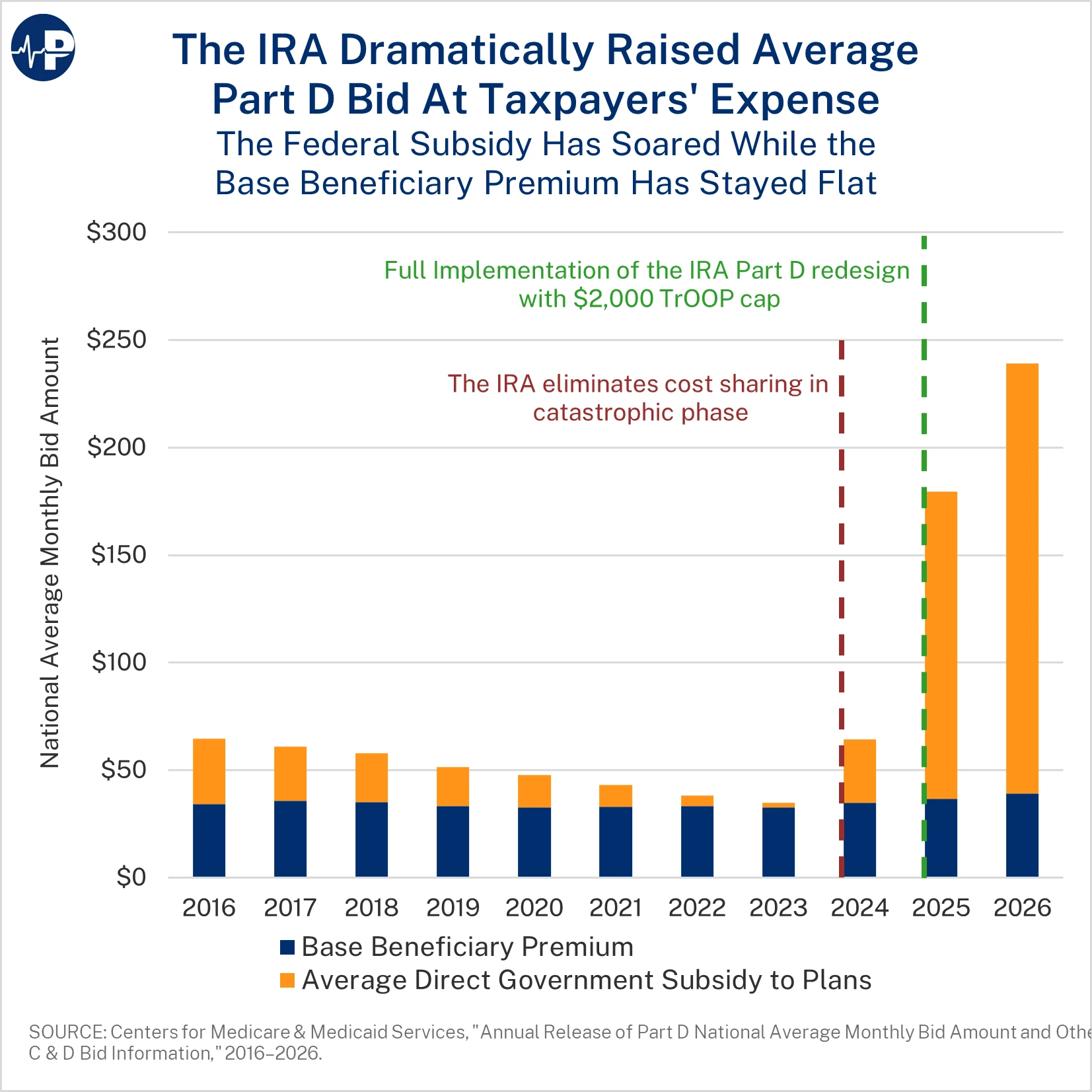
The problems stem from the changes that the IRA made to Part D starting in 2024. That year, the IRA instituted a cap on premium base rate increases, set at 6 percent annually through 2029. The IRA also eliminated cost sharing in 2024 for enrollees who hit the coverage gap phase (the so-called “donut hole,” which the ACA had functionally eliminated) where the enrollee then had to spend around $3,000 out-of-pocket before reaching the catastrophic phase of coverage.
In an attempt to eliminate the “donut hole,” the IRA reduced Part D from four phases of coverage to three and eliminated enrollee cost-sharing after hitting a true out-of-pocket (TrOOP) maximum of “$2,000” (more on that number later as the actual TrOOP is much lower) in total out-of-pocket spending beginning in 2025 (the cap is indexed increasing it to $2100 in 2026). As we’ve covered before, free is never free. As plans assumed greater liability, their bids rose sharply. But because the IRA capped growth in the base beneficiary premium at 6 percent annually, the difference between that starting point and each plan’s actual bid had to be made up through higher federal direct subsidies — shifting the cost from enrollees to taxpayers.
Both the 2024 changes and the 2025 changes caused Medicare Part D premiums and subsidies to spike, as explained in a Paragon piece from October:
Total subsidies per PDP enrollee were relatively constant between 2016 and 2023, ranging from $98.62 to $103.14. Then, in 2024, total subsidies [per enrollee] jumped 30.1 percent to $134.16. In 2025, total subsidies [per enrollee] increased another 38.5 percent to $185.75, and in 2026 total subsidies [per enrollee] leaped 31.2 percent to $243.78.
As explored below, these increases are the result of provisions in the IRA causing the average monthly plan bid [see text box] to increase 589 percent from $34.71 in 2023 to $239.27 in 2026. The IRA’s Part D redesign keeps the starting point used to calculate a portion of beneficiaries’ premiums artificially low, rising only 19.1 percent—from $32.74 to $38.99—in the same time period, which means beneficiaries’ actual premiums and subsidies must rise to cover the difference.