The statutory authority for this demonstration came from Section 402 of the Social Security Act, which provides broad authority for CMS to waive requirements for payment in Medicare and Medicaid in order to create demonstration programs that “increase the efficiency and the economy” of providing services, reduce costs, and improve the provision and utilization of services.
However, this “demonstration” program demonstrates absolutely nothing, let alone efficiency and economy. There is no control group because 99 percent of plans participated in it. The timing of the decision to create this demonstration—just before the 2024 presidential election—raises questions about whether this was an election year ploy meant to buoy the chances of a second Democratic presidential term and avoid fallout from a policy that was passed on a purely partisan basis.
As a result of the Part D demonstration, the actual average monthly premium significantly decreased in 2025 even as the starting point used to calculate that premium slightly increased from 2024. This average monthly premium—what enrollees can actually expect to pay after PDPs factor in additional benefits and coverage beyond what is required by Part D—dropped 29 percent from $53.95 in 2024 to $38.31in 2025.
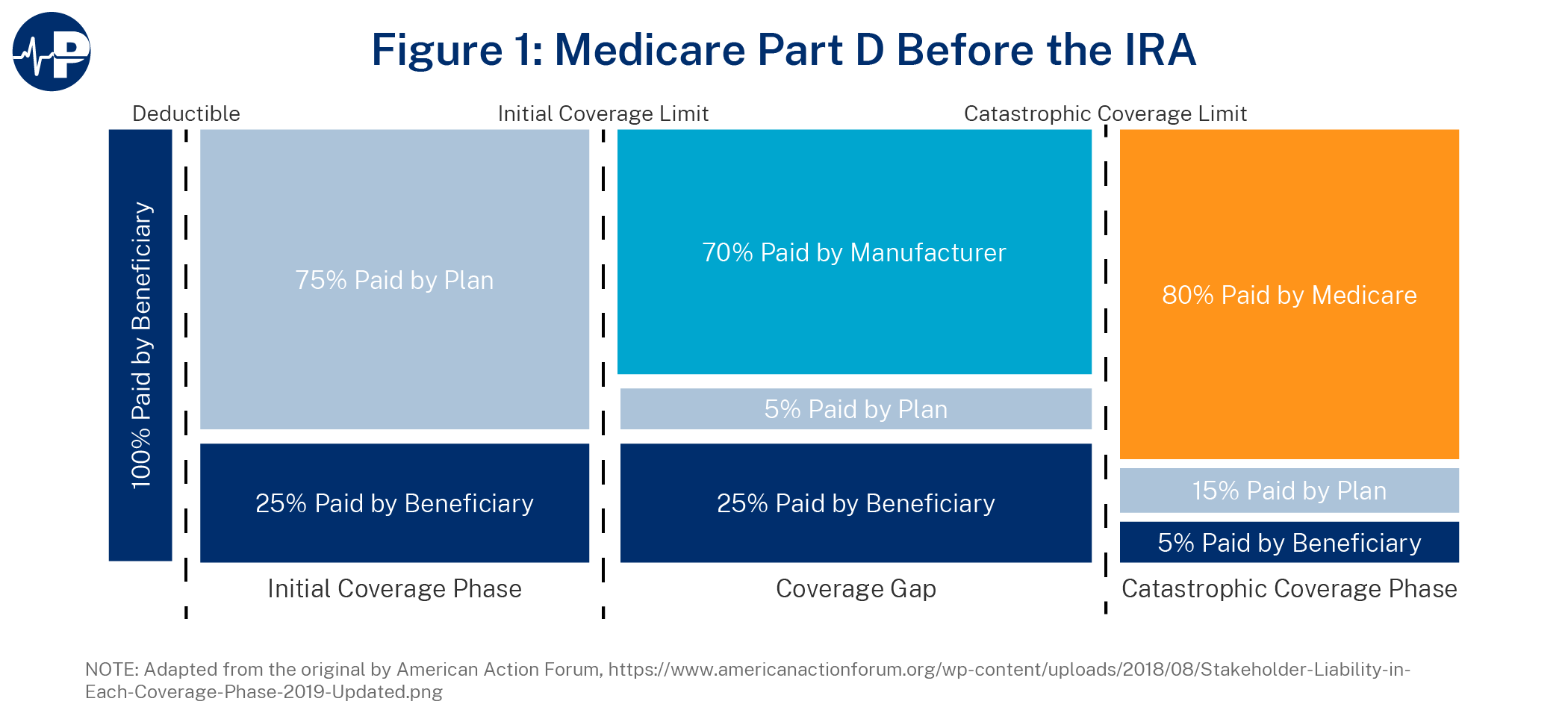
By CMS’s own admission in 2024, the significant increase in pre-demonstration premiums was expected as plan liability increased per the IRA. The Part D demonstration nevertheless kept premiums from rising—but only because of the “demonstration” infusing $5 billion in taxpayer funds, according to the Congressional Budget Office (CBO). Total government subsidies for PDPs have increased from $27.5 billion in 2023 to $51.7 billion in 2025—an increase of roughly 88 percent in just two years. Viewed as a whole, this timeline is a troubling set of machinations undertaken by the Biden administration: pass a bill in Congress on a partisan basis that purports to help Medicare beneficiaries by capping their payments at pharmacies throughout the year but also inevitably increases these beneficiaries’ costs in premiums and taxpayer debt in subsidies, then—just before an election—disguise the increase in premiums and shift additional costs to taxpayers, resulting in fewer choices and less competition and therefore even greater costs to all in the long term.
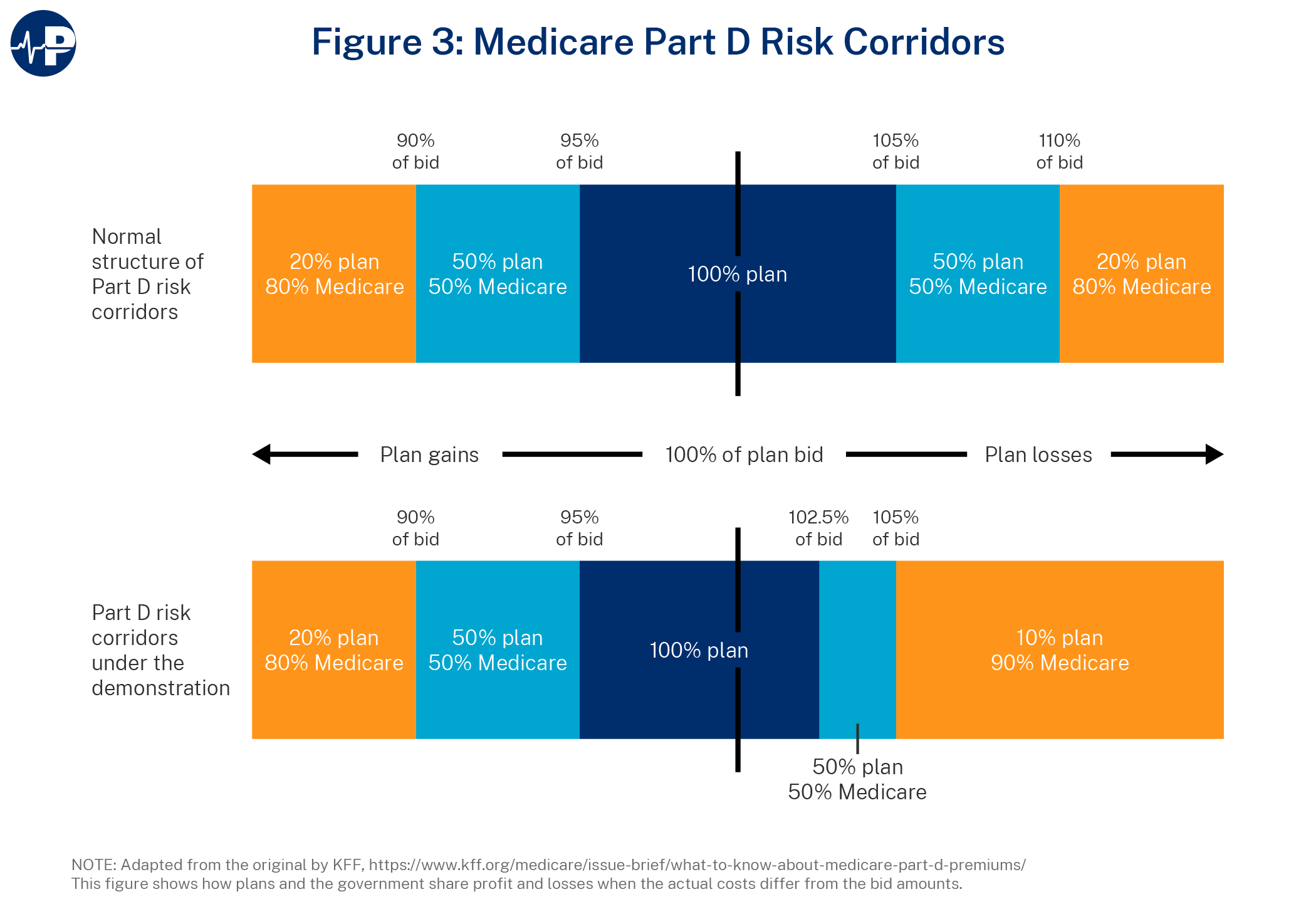
In July 2025, CMS announced that it would be adjusting the demonstration to facilitate “the program’s return to operating under regular market conditions.” CMS is reducing the base beneficiary premium reduction from $15 to $10, increasing the limit on total Part D premium increases from $35 to $50, and eliminating the altered risk corridors from the first year. CMS reasons that, because PDPs have a better understanding of how “IRA benefit changes will impact utilization and costs,” the PDPs will be better able to adapt their plans. The IRA has thrown Medicare’s prescription drug market into turmoil, unmooring it from its original market-based foundations. The Biden administration’s demonstration has made the problem worse by increasing taxpayer exposure to cover the rising costs from the IRA. The sensible phase-down by CMS creates a glide path to more normal Part D market conditions over the long run.
These more normal market conditions are responsible for the increase in federal subsidies in 2026 (when the IRA also requires CMS to limit enrollee premium increases). The direct subsidy increases due to increased bid amounts were inevitable as a mathematical consequence of the IRA, but the effects on enrollees were masked by the Biden administration’s demonstration program, which merely delayed the IRA’s costs from becoming apparent. This phase-down is a pragmatic and necessary decision to reduce unsustainable taxpayer exposure without leaving a cliff where Part D premiums will spike. In other words, if and when premiums and subsidies inevitably go up, that is a result of the IRA and not the phase-down by CMS.
As noted above, CMS also limited premium increases by rejecting PDPs with higher bids that they considered regional outliers. While CMS has authority to require certain contractual “terms and conditions” and regulations to reject bids with “significant increases in cost sharing,” it has never been used in this way before this year. Moreover, it is unclear how and whether this authority applies to increases in standalone Part D premiums, and there are no regulations or guidance from CMS explaining what significant means or the approach it will take in making these decisions in this context narrowly focused on premiums. Regardless, this rejection of plan bids raises questions about CMS setting a precedent to reject bids the agency considers to be too high. By banning plans that CMS views as too expensive, overall subsidies are somewhat lower, but CMS is substituting its judgment for those of enrollees. If the plans are not worthwhile, PDP enrollees will simply not sign up for them, and competition will keep prices low more effectively and sustainably than government decision-making and distortion would.