
Brian Blase, Ph.D., is the President of Paragon Health Institute. Brian was Special Assistant to the President for Economic Policy at the White House’s National Economic Council (NEC) from 2017-2019, where he coordinated the development and execution of numerous health policies and advised the President, NEC director, and senior officials. After leaving the White House, Brian founded Blase Policy Strategies and served as its CEO.
Myth: The OBBB cuts Medicaid


Debunking the Myths of the One Big Beautiful Bill
Myth: The OBBB cuts Medicaid.
Key Facts
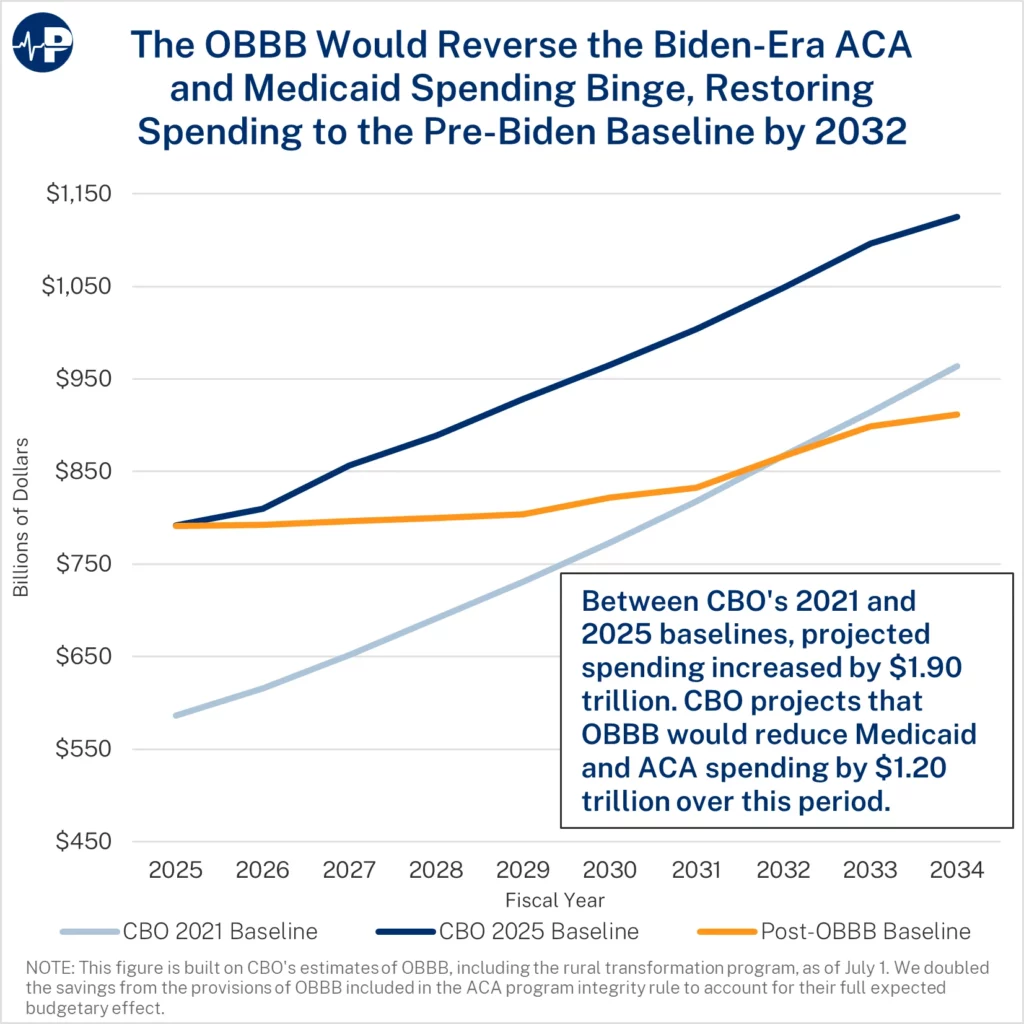
- There are no cuts to Medicaid. OBBB slows spending growth, putting the program on a more sustainable path.
- For four years, the Biden administration pursued an enrollment-at-any-cost agenda, which dramatically increased federal subsidies to health insurers and big hospital systems.
- As a result, the federal baseline for Medicaid and Affordable Care Act (ACA) subsidies increased by $1.9 trillion over the next decade between the 2021 and 2025 baselines.
- OBBB addresses the Medicaid money-laundering machine, promotes work and personal responsibility in Medicaid, reduces the number of improper enrollees in Medicaid and the ACA exchanges, and reverses costly Biden regulations.

Background
There are more than 12 million improper enrollees in Medicaid expansion and the ACA exchanges combined in 2025. This problem stems from dramatically higher subsidies and curtailed eligibility verifications. Fraud rings misled exchange applicants about free perks, coached them to misstate income, and profited from commissions—while insurers reaped windfalls. Improper exchange enrollment will cost the government nearly $30 billion this year and improper federal Medicaid payments equal $1.1 trillion over the past decade.
Related Content


Subscribe
Sign up now for your health policy updates.