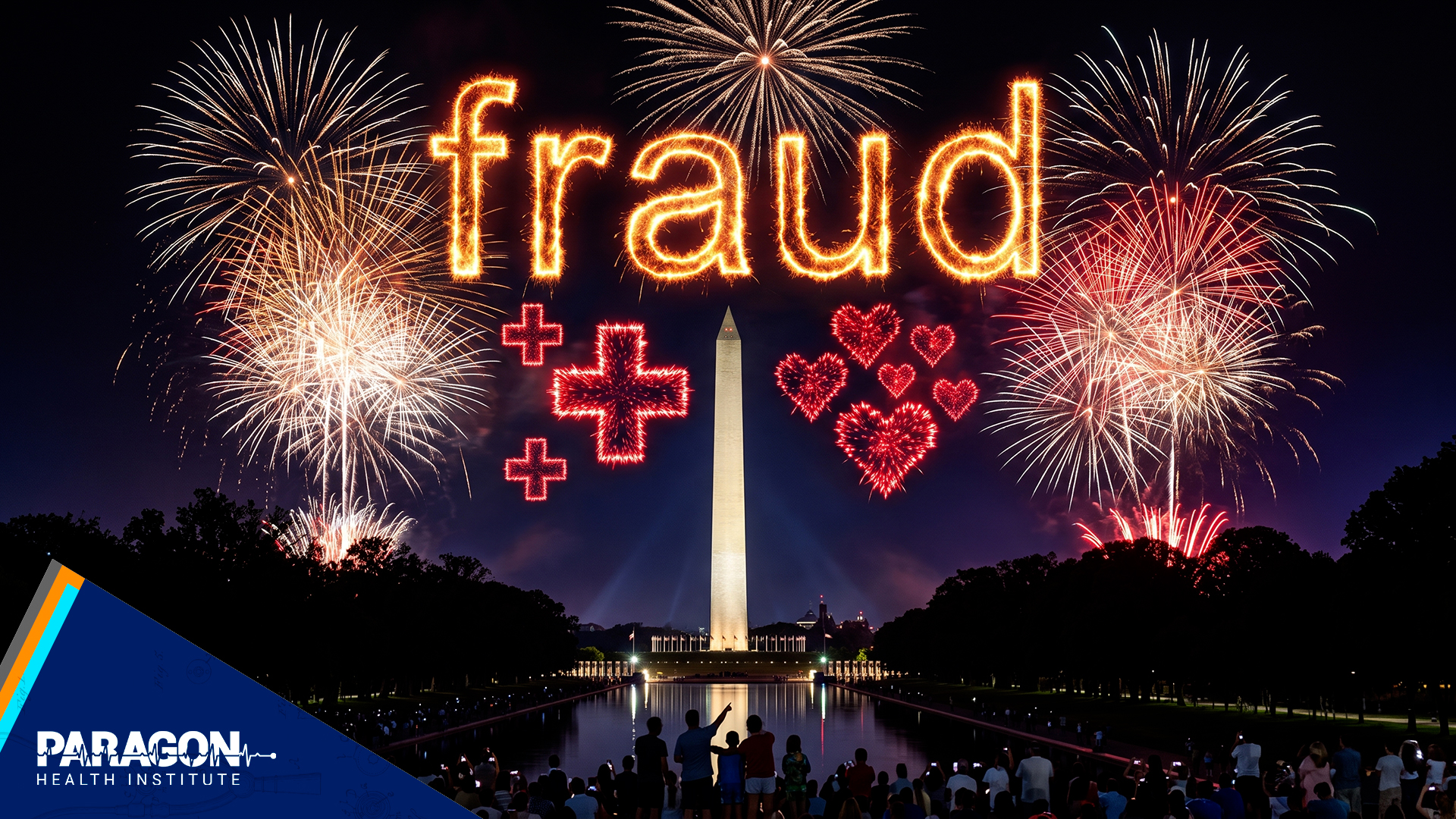
Health care fraud continues to siphon hundreds of millions of dollars from taxpayers, according to the Paragon Health Care Fraud Dashboard. Between June 27 and July 10, the Department of Justice (DOJ) announced numerous charges, settlements, and sentences spanning laboratory testing, behavioral health, and medical transportation, and the Department of Health and Human Services Office of Inspector General (HHS-OIG) stripped funding from a state’s Medicaid fraud unit over insufficient fraud enforcement.
Major fraud findings included:
New York
HHS-OIG denied recertification of New York’s Medicaid Fraud Control Unit (MFCU) and suspended its federal funding, citing years of weak criminal enforcement. Despite about $60 million in annual federal funding and more than 270 staff members, New York’s MFCU secured only eight or nine criminal indictments a year in 2023 and 2025—versus hundreds in similarly sized states—and just four convictions for patient abuse or neglect despite more than 2,000 such referrals annually. HHS-OIG uncovered numerous procedural issues, including backlogs in investigations, slow case progression, and systemic referral and tracking deficiencies. (July 2)
Two New York ambulette company owners were charged with fraudulently billing Medicaid more than $35 million for medical transportation that was never provided or artificially inflated. Saad Aziz and Zabed Chowdhury, who owned and operated Tri-Hamlet Taxi Inc., allegedly paid illegal kickbacks to Medicaid beneficiaries to request medical transportation that often never occurred, primarily for methadone treatment. They also directed beneficiaries to request rides to unnecessarily distant addiction treatment centers and to provide false pickup or drop-off addresses in order to bill Medicaid for longer, more expensive trips. (July 2)
Georgia
A nurse practitioner was sentenced for a scheme that billed Medicare more than $136 million for medically unnecessary durable medical equipment (DME) and prescription drugs. Jean Wilson used two telemedicine companies she owned to pay illegal kickbacks to medical providers to sign orders for braces and drugs that beneficiaries did not need. She signed many prescriptions herself. She then sold the orders to marketing companies that resold them to suppliers and pharmacies, which billed Medicare. (June 30)
Tennessee
A Memphis gynecologic oncologist was sentenced for performing more than 15,000 biopsy procedures on Medicare and Medicaid patients with adulterated medical devices and billing more than $41 million for them. Sanjeev Kumar routinely skipped required disinfection and processing steps, subjecting thousands of women to procedures performed with dirty instruments. He netted more than $4.8 million from Medicare and Medicaid alone. (July 8)
California
Two California mental health company executives were sentenced for a scheme to unlawfully distribute more than 37 million Adderall pills and defraud insurers of more than $12 million. Ruthia He, founder and former CEO of Done Global, spent more than $40 million on ads to convince Americans that they had ADHD, then drove unnecessary Adderall prescriptions—even to patients the company had been warned were suffering from Adderall psychosis and other conditions worsened by stimulants. She and the company’s former clinical president, David Brody, pressured clinicians to overprescribe; used auto-refills to keep patients medicated for years without seeing clinicians; and submitted false prior authorization requests to Medicare, Medicaid, and commercial insurers that misrepresented their diagnosis processes. (July 7)
New Jersey
Six New Jersey individuals were charged in a scheme to defraud Medicare and Medicaid of more than $20 million through kickbacks and medically unnecessary prescriptions. Five of the six pleaded guilty. Pharmacy owner Sherif Elmasri paid kickbacks to health care providers in exchange for issuing prescriptions for high-reimbursement drugs he selected, which his pharmacies then billed to Medicare and Medicaid. Providers charged in the scheme included an emergency medicine doctor, two advanced practice nurses, and a neurology-practice office manager. (July 9)
North Carolina
A North Carolina substance-abuse treatment business owner pleaded guilty to fraudulently billing Medicaid for more than $1.7 million in urine drug tests that were never performed. Gwendolyn Singleton owned and operated Joelle’s Center of Hope, which claimed to provide substance-abuse treatment. She submitted fraudulent urine drug testing claims to Medicaid, listing a nurse practitioner and a doctor as the ordering providers who said they never ordered any such tests. (July 9)
Maryland
A Maryland oncology practice and its owner agreed to pay $1.45 million to resolve allegations that they billed federal health programs for chemotherapy they did not pay for or never administered. Progressive Oncology & Hematology and owner Mouhamad Bazzi allegedly submitted claims to Medicare, Medicaid, and the U.S. Department of Veterans Affairs for drugs obtained at no cost through charitable organizations or grants; split leftover medication from single-use vials across multiple patients while billing as if each received a separate vial; and billed for drugs that were prescribed but never administered. (July 1)
Wyoming, North Dakota
The owner of an autism services clinic and her daughter were sentenced and ordered to pay more than $800,000 for a Medicaid and TRICARE fraud scheme. Tera Marie Campbell used her clinic, The Olive Branch—which was supposed to provide behavioral therapy for children with autism in Wyoming and North Dakota—to bill for services that were upcoded (billed as a higher-paying service than the one delivered), uncertified, or never provided at all. Her daughter, Tayler Ann Krauss, worked as the clinic’s medical biller. (July 2)
As fraud cases continue to surface, track the latest on our Health Care Fraud Dashboard.